

26 Aug What Should You Fix at Your Bear Lake Cabin Before Summer Ends?
Written by Stu, Lead Technician at Bear Lake Services, serving Bear Lake, Fish Haven, Bloomington, Garden City, and surrounding communities with handyman services, property maintenance, seasonal care, repairs, and property improvements.
You may only have one or two weekends left at your Bear Lake cabin before schedules change, school starts, visits become less frequent, or the property sits empty for longer stretches.
Then you notice everything at once.
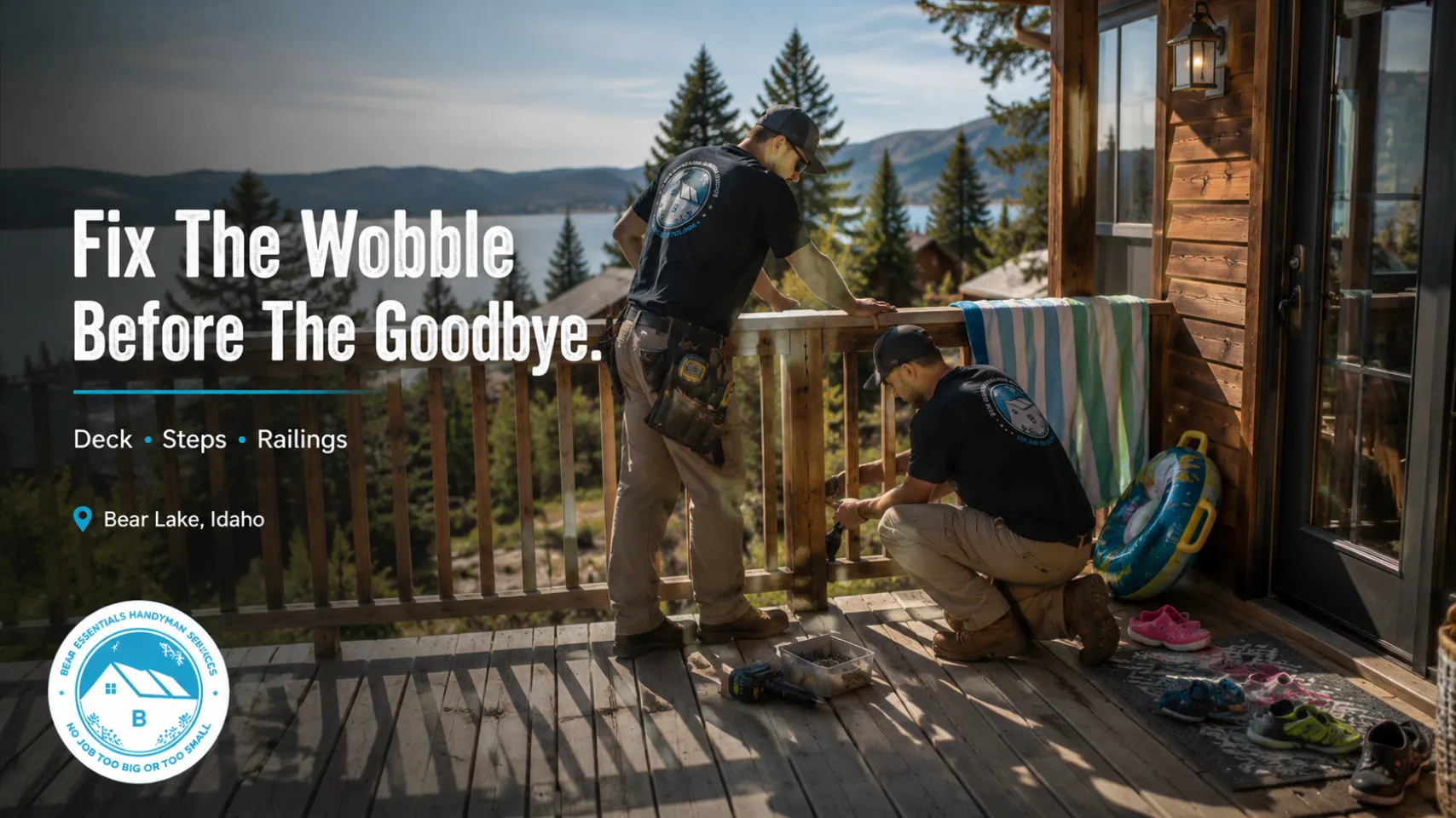
The deck railing has started moving.
One window screen has a tear.
A section of gutter doesn’t look quite right.
The deck finish is looking worn.
There’s a drywall ding you’ve been meaning to patch since June.
And suddenly the last weekend at the cabin starts looking like a very long repair list.
The better question isn’t: “How do I fix everything before summer ends?”
It’s: “What actually deserves attention before I leave?”
For cabin owners around Bear Lake, Fish Haven, Bloomington, and the surrounding area, the answer usually depends on what the problem affects: safety, water management, weather exposure, property security, or appearance.
Some repairs are worth moving toward the top of the list. Others can reasonably be assessed and scheduled rather than rushed.
Here is how to tell the difference.
If I Only Have One Weekend Left, What Should I Look at First?
Start with problems that could affect how safely the property is used or how well the building keeps water, weather, and pests where they belong.
That makes a loose railing fundamentally different from chipped interior paint.
It also makes a gutter pulling away from the roofline different from a cosmetic drywall ding.
A practical first pass looks like this:
These aren’t universal diagnoses. A photograph or quick visual observation can’t establish the condition of a structural component, roof system, drainage system or hidden material. When something appears unstable, deteriorated or moisture-damaged, the underlying cause should be evaluated before deciding on the repair.
The Deck Railing Moves When I Lean on It. Can It Wait?
This is one of the items I wouldn’t lump into a general “fall maintenance” list.
If a deck railing, stair railing, step or walking surface feels unstable, treat the condition as the issue—not its appearance.
The USDA Forest Service’s current Wood and Timber Condition Assessment Manual describes visual inspection as part of evaluating wood already in service, alongside more advanced assessment methods when necessary.
For a cabin owner, that means you don’t need to diagnose the engineering problem yourself.
You do need to recognize when something deserves inspection.
Look for things such as:
noticeable movement in a railing or guard;
loose or damaged boards;
visibly deteriorated wood;
movement around stairs or steps;
fasteners or connections that appear loose or damaged.
A coat of stain isn’t the answer to a component whose condition is questionable.
Repair and finishing are two different decisions.
If the deck needs repair, establish that first. Then decide what maintenance or finishing makes sense.
My Deck Stain Is Fading. Does That Mean the Deck Needs to Be Restained Now?
Not automatically.
This is where cabin owners can save themselves from treating every visual imperfection as an emergency.
Exterior wood is exposed to sunlight, water and weather. The USDA Forest Service explains that protection from those elements is one of the primary technical purposes of exterior wood finishes.
Its Forest Products Laboratory also notes that decks experience weather-related shrinking and swelling and can develop checks, cracks, raised grain and mildew without appropriate maintenance.
But faded color alone doesn’t tell you everything about the condition of the deck.
Look at the broader picture:
Is the wood sound?
Are boards damaged?
Are railings secure?
Is the finish simply weathered?
Are there areas staying wet longer than expected?
Is there visible deterioration that needs investigation?
The Forest Service also distinguishes penetrating exterior stains from film-forming finishes and explains that different products behave differently over time.
So rather than deciding: “It’s faded, therefore it needs stain this weekend,”
the better decision is: “Let’s determine the condition of the wood and existing finish, then choose the appropriate maintenance.”
That is especially important if you are trying to squeeze the project into your last weekend at Bear Lake.
One Section of My Gutter Is Pulling Away. How Urgent Is That?

Move water-management problems higher on the list.
The U.S. Department of Energy’s Building Science Education program explains why: when roof runoff isn’t carried away from a house, water can saturate soil surrounding the building and contribute to moisture-related durability problems.
That makes gutters more than an appearance issue.
Walk around the cabin and look for obvious signs such as:
gutter sections that appear loose or separated;
downspouts that have disconnected;
water being discharged immediately beside the building;
obvious erosion beneath a discharge point;
damaged gutter connections;
drainage paths that no longer appear to carry water where intended.
You don’t have to determine the complete drainage solution during the walkaround.
The important part is recognizing that a water-management problem deserves attention before a cosmetic repair does.
This is also why gutter repair, downspout work, grading and drainage shouldn’t automatically be treated as separate problems. They are different pieces of the same basic question: Where does the water go?
My Window Screen Is Torn. Is That Really a Priority?
It depends on the opening and how the cabin will be left.
A small screen repair doesn’t carry the same potential safety implications as an unstable railing. But damaged screens shouldn’t automatically be dismissed as cosmetic either.
EPA pest-management guidance specifically recommends repairing broken windows and screens as part of preventing pests from entering buildings.

So ask:
Will this window be opened?
Is the screen substantially damaged or pulling away?
Does the actual window still close and lock properly?
That last question matters.
A damaged screen and a window that won’t properly close are not equivalent problems.
If the window itself isn’t closing or securing correctly, that deserves more attention than a minor tear in an otherwise functional screen.
What About the Small Repairs Inside the Cabin?
This is where prioritization becomes useful.
Maybe you’ve got:
a drywall ding from moving furniture
a cabinet handle that needs tightening
a small paint touch-up
trim that could use attention
or another cosmetic project you’ve been staring at all summer.
Those projects still matter.
They just don’t necessarily belong ahead of an unstable deck component, drainage problem or exterior opening that won’t close properly.
There is one important exception:
Don’t automatically classify a stain or damaged drywall as cosmetic.
If drywall discoloration, bubbling paint, staining, softness or other damage appears to be associated with moisture, the source should be investigated rather than simply patched or painted over.
Fixing the visible surface doesn’t correct an active leak.
Should I Walk Around the Entire Cabin Before I Leave?
Yes—a deliberate visual walkaround is a simple way to notice changes that weren’t obvious while everyone was enjoying the property.
Don’t turn it into a technical inspection.
Just slow down.
Start at the front door and walk the perimeter.
Look up occasionally. Look down occasionally.
Then look back toward the cabin from different sides of the property.
Outside, notice:
Decks and stairs
Railings
Gutters and downspouts
Roof edges visible from the ground
Soffit and fascia
Exterior doors
Window and door screens
Exterior trim
Fencing
Outdoor fixtures
Vegetation immediately around structures
Drainage paths
Driveway conditions
Inside, notice:
Doors and windows closing properly
Visible plumbing leaks
Unusual water staining
Damaged drywall
Loose fixtures
HVAC condition or obvious concerns
Items you’ve postponed during the summer
You aren’t trying to become a building inspector.
You’re creating a short, prioritized repair list instead of leaving with twenty unrelated mental notes.
How Do I Decide What Gets Done Now and What Can Wait?
Here’s the second decision tool I’d use for this article.
That’s a much better end-of-summer strategy than trying to complete every unfinished project at once.
What If I Don’t Know Whether Something Is a Small Repair or a Bigger Problem?
That’s common.
A loose piece of trim may be straightforward.
A loose deck railing may require closer evaluation.
A gutter issue could be isolated—or part of a larger drainage problem.
Stained drywall could be old damage—or evidence of moisture that hasn’t been addressed.
The useful question to ask a handyman or contractor isn’t simply: “How much will it cost to fix this?”
Ask: “What appears to be causing it, and what needs to be addressed before the visible repair is made?”
That distinction matters.
Good maintenance isn’t just making the symptom disappear.
It’s understanding what you’re repairing.
One Weekend Left? Use This Order
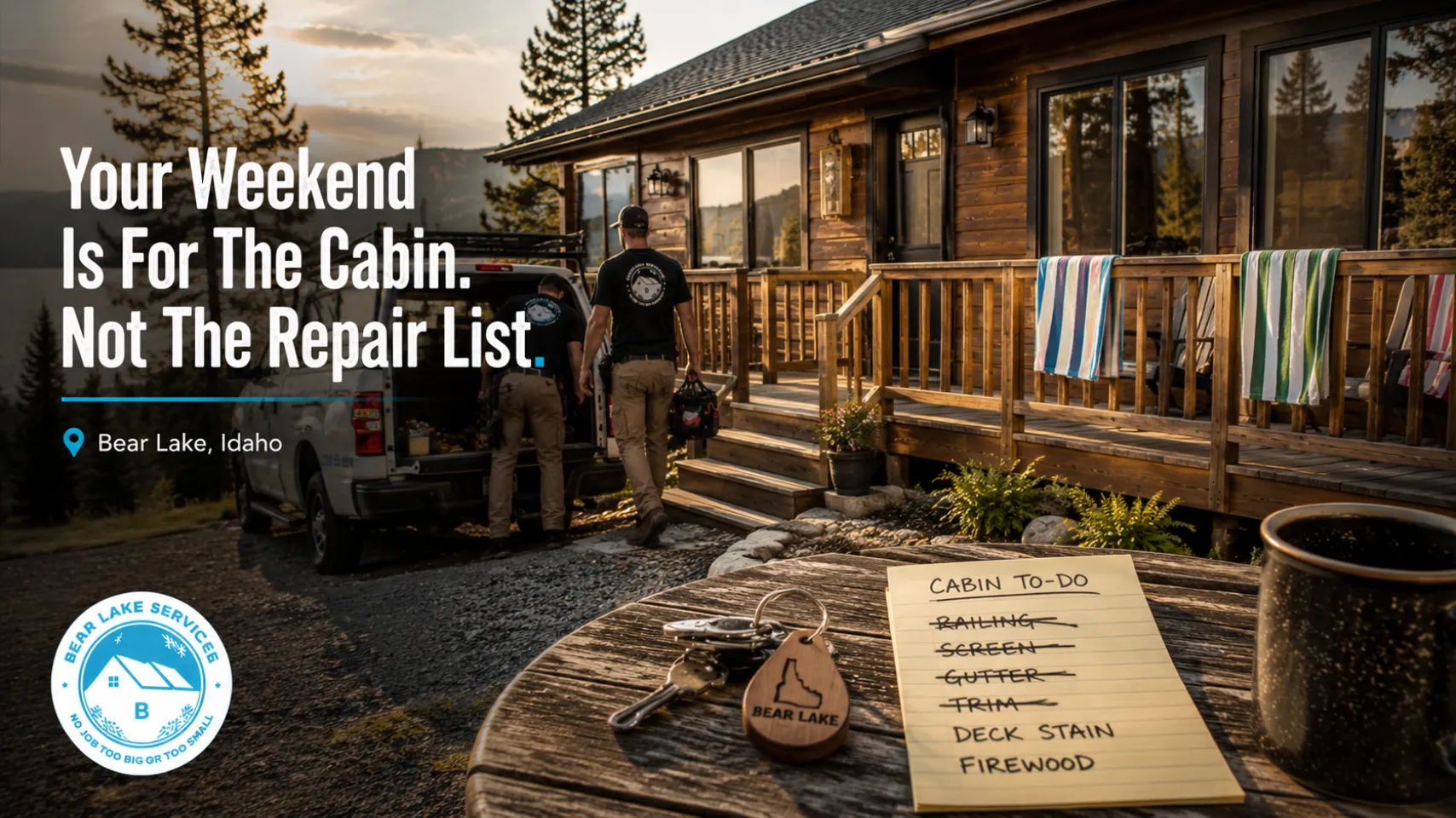
If you’re standing at your Bear Lake cabin with one weekend remaining and a growing project list, use this sequence:
1. Safety-related concerns
Unstable railings, questionable stairs, damaged walking surfaces and similar issues deserve early attention.
2. Active water or drainage concerns
Leaks, gutters, downspouts and drainage problems move up the list because controlling water is important to building durability.
3. Exterior openings and weather exposure
Doors, windows, screens and other openings should be assessed based on whether the building can close, secure and exclude weather and pests.
4. Deteriorating exterior materials
Decking, fascia, soffit, exterior trim and other exposed components can be evaluated to determine whether repair or maintenance is appropriate.
5. Cosmetic projects
Drywall patches, paint touch-ups and similar work can usually be scheduled after higher-priority concerns have been addressed—unless the cosmetic damage is actually evidence of another problem.
That’s the entire strategy: Don’t try to finish the cabin. Prioritize the cabin.
Leaving Bear Lake Before You Finish the List?
You don’t necessarily have to spend your final weekend doing repairs.
Bear Lake Services handles handyman and property-maintenance projects for cabin and property owners around the Bear Lake area, including deck repairs and staining, gutter/downspout work, soffit and fascia repairs, window and door screen work, drywall repairs, landscaping and other property-maintenance needs.
If you are leaving town before everything on the list is finished, the goal is to identify what needs attention first and make a plan for the rest.
For owners who won’t be at the property regularly, Bear Lake Services also offers its Monthly Emergency Contact & Property Check Program, providing a local point of contact and ongoing property checks while owners are away.
Have one weekend left and five things on your list? Start with the ones that protect the people using the cabin and the property itself.
Frequently Asked Questions
What cabin repairs should I prioritize before leaving Bear Lake?
Start by evaluating potential safety issues, active water or drainage problems, exterior openings that won’t properly close or secure, and visibly deteriorated exterior components. Cosmetic projects can generally be scheduled around those higher-priority concerns.
Should I repair a loose deck railing immediately?
An unstable railing or guard deserves prompt evaluation because it may affect safe use of the deck. The cause and appropriate repair depend on the actual construction and condition.
Does faded deck stain mean my deck is damaged?
Not necessarily. Exterior finishes weather over time. Assess the condition of the wood, railings, boards and existing finish before deciding whether the deck needs maintenance, repair or refinishing. USDA Forest Service resources explain that exterior finishes protect wood from sunlight, moisture and weathering.
Should damaged window screens be repaired before leaving a cabin?
EPA guidance recommends repairing damaged screens as part of pest exclusion. Priority depends on the severity of the damage and whether the window itself closes and secures properly.
Why should I deal with gutter problems before cosmetic repairs?
Gutters and downspouts help manage roof runoff. DOE building-science guidance warns that water not carried away from a house can saturate soil around the building and contribute to moisture and durability problems.
Can Bear Lake Services handle repairs after I leave?
Bear Lake Services provides a range of handyman and property-maintenance services, making this an option to discuss when an owner can’t finish a project before leaving the area.
Sources & Further Reading
U.S. Department of Energy — Foundation Drains, Gutters & Downspouts
USDA Forest Service — Finishes for Wood Decks
USDA Forest Service — Finishing of Wood
USDA Forest Service — Wood & Timber Condition Assessment Manual
U.S. EPA — Pest Control Resources for Buildings