

09 Sep When Should You Repair, Stain, or Replace a Cabin Deck?
Written by Stu, Lead Technician at Bear Lake Services, serving Bear Lake, Fish Haven, Bloomington, Garden City, and surrounding communities with handyman services, property maintenance, seasonal care, repairs, and property improvements.
A faded deck doesn’t necessarily need to be replaced. A loose board doesn’t necessarily mean the entire deck has failed. And putting fresh stain over a deck doesn’t solve movement, deterioration, loose railings, or other underlying problems.
That’s what makes deck maintenance confusing for cabin owners. After several seasons of sun, rain, snow, foot traffic and normal outdoor exposure, you may see faded color, splintering, peeling finish, loose boards or areas that simply don’t look the way they used to. The difficult question isn’t whether the deck has changed. It’s deciding what those changes actually mean.
For Bear Lake cabin owners, that usually leads to three possibilities: maintain/refinish what you already have, repair specific components, or evaluate whether deterioration is extensive enough that replacement makes more sense. Here’s how to tell those decisions apart without assuming every weathered deck needs major reconstruction.
Does a Faded Deck Need to Be Replaced?
Usually, appearance alone doesn’t answer that question.
Exterior wood naturally changes as it is exposed to weather. The USDA Forest Service explains that weathering results from several environmental factors, including moisture, sunlight, temperature changes, abrasion and biological agents. On unfinished wood, weather exposure can change the color, roughen the surface and contribute to surface checking over time.
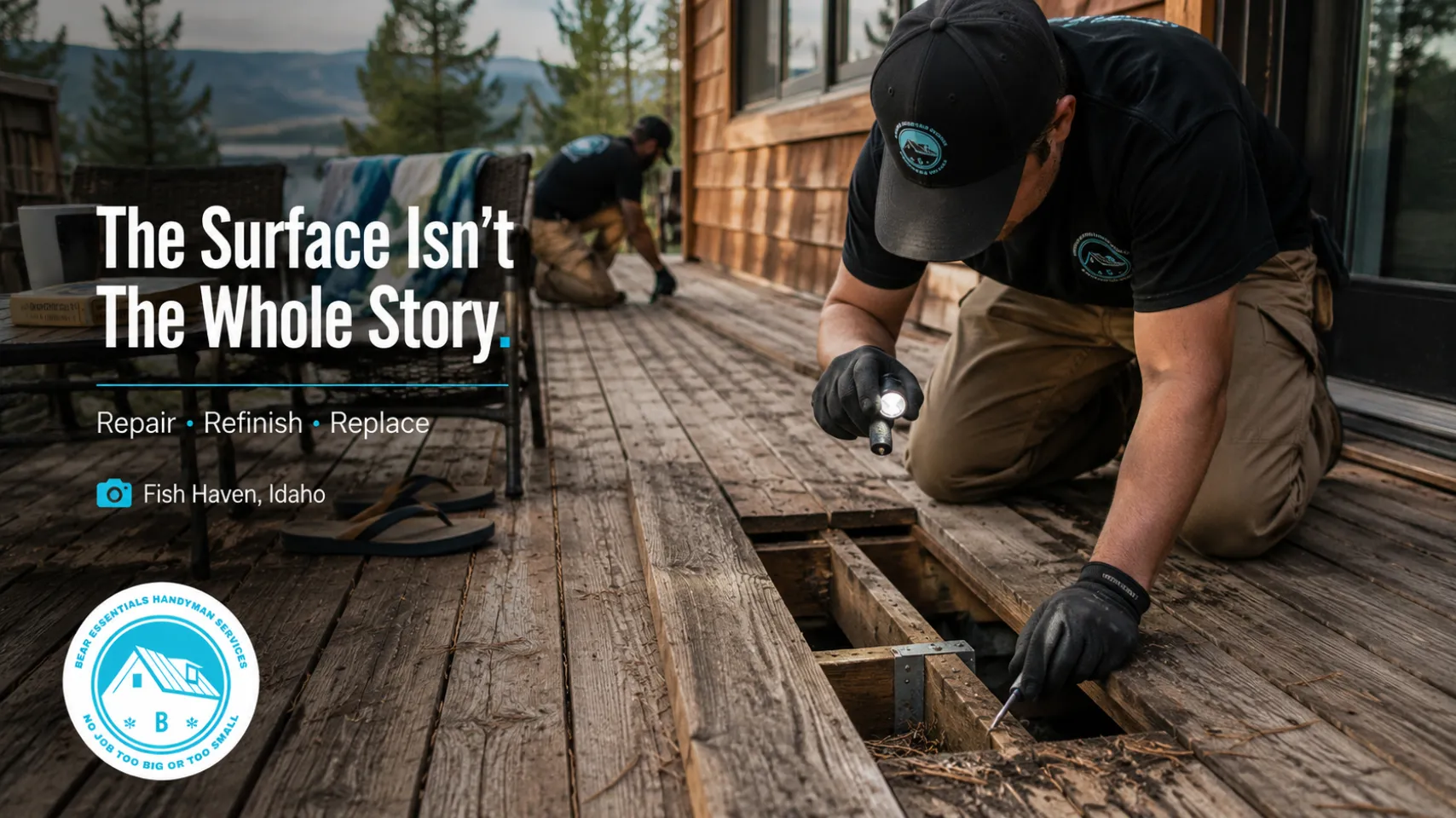
That means fading tells you something about surface exposure, but it does not by itself establish that the deck’s underlying structure needs replacement. Before making that decision, separate what you’re seeing on the surface from what the deck is doing physically. A deck that has lost color but remains sound and stable presents a very different situation from one with soft wood, unstable railings, damaged supports or significant movement.
Should I Stain My Deck or Repair It First?
Evaluate and complete needed repairs first.
Stain is a finish, not a structural repair. USDA Forest Service guidance explains that exterior finishes help protect wood surfaces, particularly against water, sunlight and weathering. Research specifically addressing wood decks also notes that finishes can help minimize weather-related checking, raised grain and mildew development.
If boards are loose, railings move, components are deteriorated or sections of wood are questionable, covering the surface with a new finish doesn’t resolve those conditions. Determine whether the deck is sound first, make necessary repairs, prepare the surface appropriately, and then determine whether refinishing is suitable.
That’s why “Does my deck need stain?” is often the wrong first question.
A better one is: “What condition is the deck in underneath the finish?”
Repair vs. Stain vs. Replace: What’s the Difference?
The word evaluate matters here because a photograph, discoloration or one visible defect cannot tell a homeowner the condition of the entire deck.
What Does Splintering or Rough Wood Actually Mean?
Splintering and surface roughness don’t automatically mean replacement.
Wood decks face particularly demanding exposure because their horizontal surfaces receive sunlight and collect moisture. As wood repeatedly wets and dries, it shrinks and swells. USDA Forest Service deck guidance notes that this exposure can contribute to checks, cracks and raised grain.
The important distinction is surface weathering versus deeper deterioration. Light surface roughness on otherwise sound wood may be addressed as part of appropriate surface preparation and refinishing. Wood that is soft, substantially deteriorated, cracked in ways that affect its function, or unable to hold connections reliably presents a different issue.
So don’t make the decision based only on how rough the deck feels under bare feet. Look at the condition of the material and how the deck components are performing.
What If Only a Few Deck Boards Are Bad?
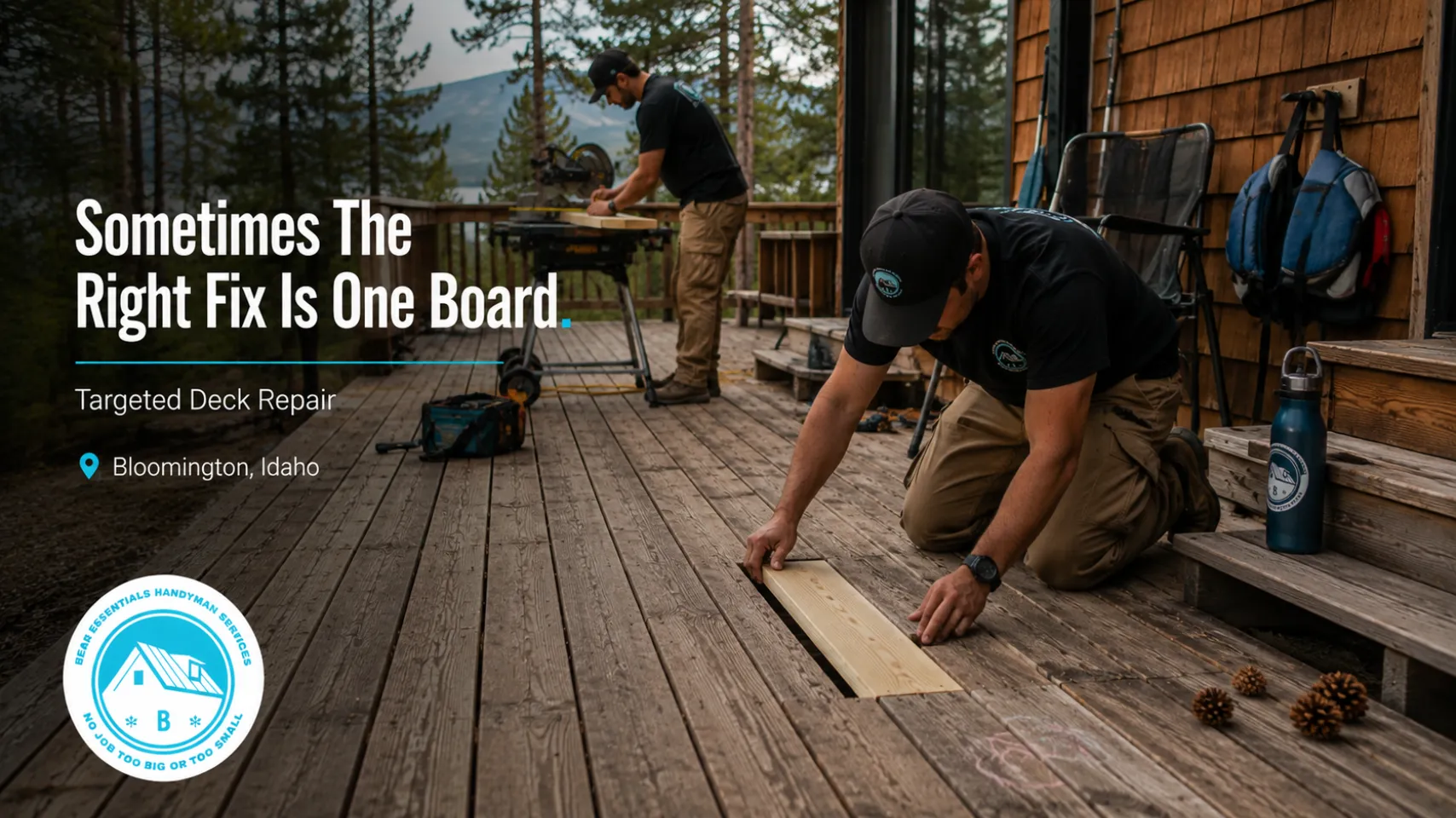
This is where repair can make more sense than immediately discussing replacement.
If deterioration or physical damage is genuinely limited to individual components while the surrounding deck remains sound, replacing or repairing affected components may be possible. But the important part is determining why those boards deteriorated and whether the visible problem is actually isolated.
For example, repeatedly wet areas deserve more investigation than simply replacing a board and moving on. Exterior wood durability is closely connected to moisture management, and weathering can affect both wood and its finish over time.
This is also why we shouldn’t publish claims such as “If fewer than 20% of your boards are damaged, repair the deck.” There is no universal percentage that can responsibly make that decision for every deck. Condition, location, connections, supports, construction and extent of deterioration all matter.
Is a Loose Railing a Staining Problem?
No.
If a railing moves, treat that separately from appearance or finish condition.
Current guidance from the North American Deck and Railing Association specifically highlights rail stability as an important part of deck safety. NADRA’s deck evaluation resources cover deck surfaces, stairs, supports, beams and joists, ledgers, handrails and guards because assessing a deck involves substantially more than looking at the walking surface.
A loose railing might involve a localized connection that can be repaired, or it could be associated with deterioration that deserves broader evaluation. Either way, adding stain doesn’t make the railing more secure.
Stability first. Finish second.
What About Peeling or Worn Deck Finish?
A failing finish deserves attention, but first identify what kind of finish is present and what condition the wood underneath is in.
USDA Forest Service guidance distinguishes between penetrating stains and film-forming finishes. Penetrating stains behave differently from paints and other coatings that form a film on the wood surface; Forest Service guidance notes that penetrating stains are less prone to cracking and peeling than film-forming finishes. Surface preparation and the compatibility of a new finish with the existing system also matter.
This is another reason homeowners shouldn’t simply buy a can of stain based on color and apply it over whatever is already there. Before refinishing, determine what you’re working with, whether the wood is sound, what surface preparation is required, and whether the chosen product is appropriate for that deck and existing finish.
How Often Does a Cabin Deck Need to Be Stained?
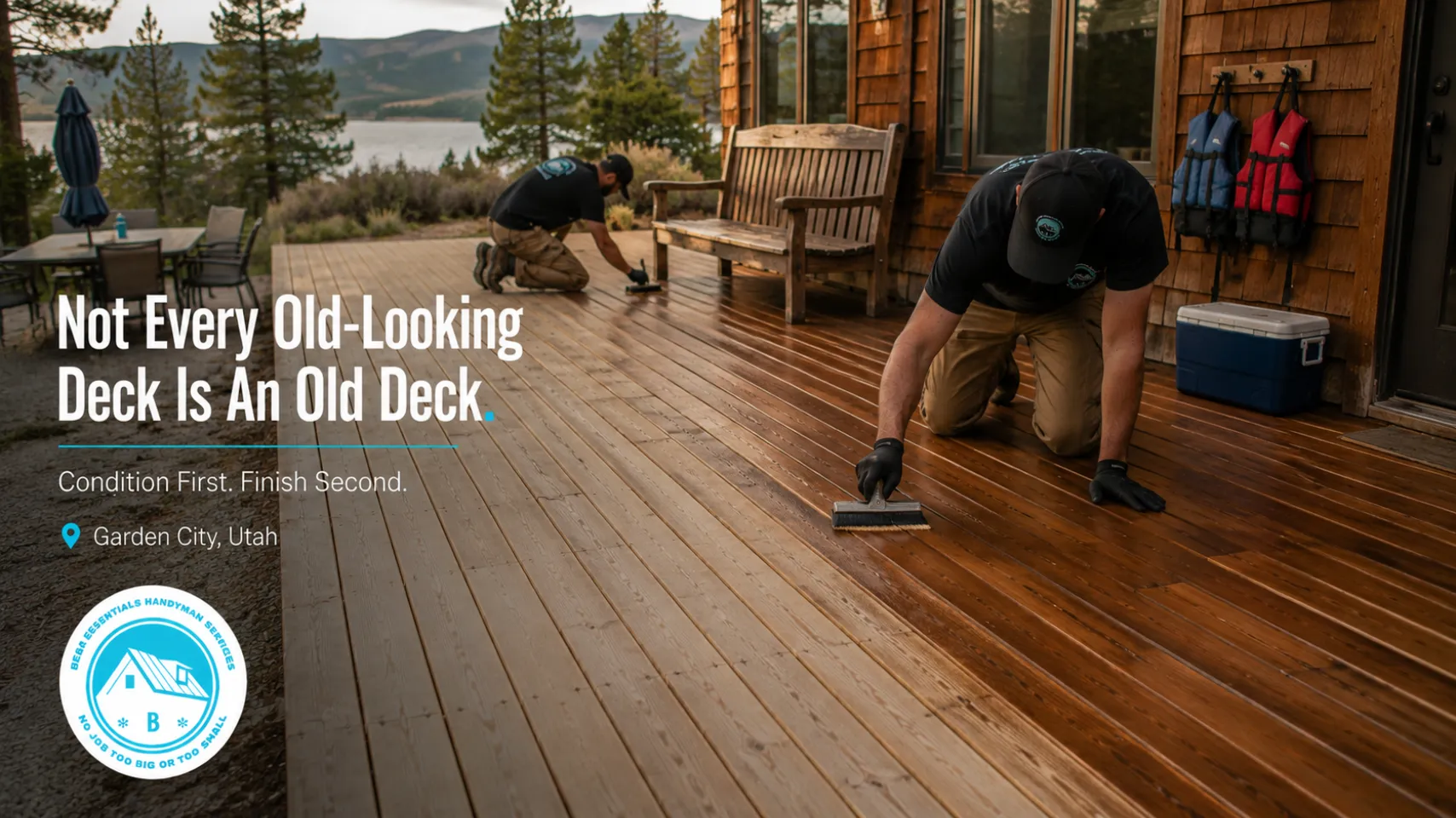
There isn’t one responsible answer such as “every two years” that applies to every Bear Lake deck.
USDA Forest Service research demonstrates why. In one study of deck finishes on western redcedar and Douglas-fir under outdoor exposure in western Oregon, performance varied by finish type. Clear finishes generally showed poorer performance sooner, while some tinted and lightly pigmented finishes performed longer; the researchers characterized two to three years as excellent service life for the particular low-solids transparent finish types studied under fully exposed horizontal conditions.
That research is useful for understanding that finish life varies, but it should not be converted into a Bear Lake-specific staining schedule. Your actual maintenance interval can depend on wood species, existing finish, product, preparation, sun and moisture exposure, traffic and the deck’s individual environment.
Instead of staining because the calendar says it’s time, evaluate the finish and wood condition.
When Does Repair Stop Making Sense?
This is where homeowners often want a simple number.
There isn’t one.
A deck doesn’t automatically require replacement because it reaches a certain age, has a certain number of damaged boards, or hasn’t been stained recently. Conversely, repeatedly replacing surface boards doesn’t necessarily make sense when deterioration involves important connections, supports or multiple parts of the structure.
NADRA notes that evaluating residential decks requires consideration of deterioration of structural materials as well as fasteners, connectors, guards, handrails, stairs and landings. Its consumer guidance recommends appropriate professional inspection for older decks rather than relying solely on surface appearance.
Replacement therefore becomes a condition and scope decision, not simply an age decision. When problems are widespread, involve important structural components, or make repeated isolated repairs impractical, a broader professional evaluation can determine whether substantial repair or replacement is appropriate.
Can I Just Replace the Deck Boards and Keep Everything Underneath?
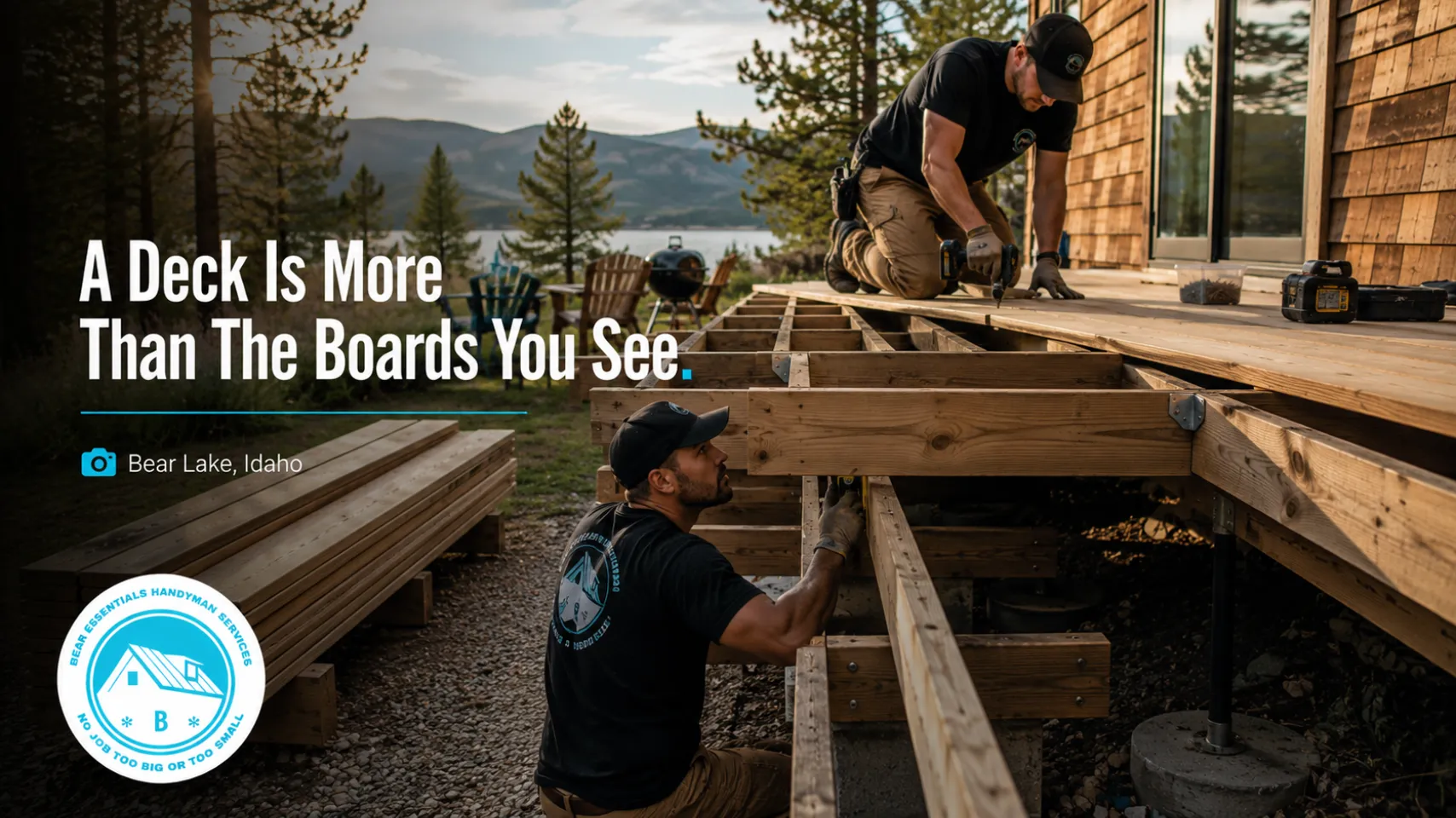
Sometimes existing components can remain. Sometimes they shouldn’t.
Removing old decking may reveal conditions that weren’t visible from above, which is why the structure underneath should not simply be assumed to be sound. Posts, beams, joists, ledger connections, fasteners and other components all play different roles in a deck system.
NADRA’s current evaluation guide specifically separates these components during deck assessment, including footings and supports, posts and columns, beams and joists, ledger, deck boards, handrails and guards.
If you’re considering replacing the entire walking surface, it makes sense to assess what will support the new material before deciding how much of the existing deck should remain.
Does My Deck Need Repair or Replacement Before Fall?
September can be a useful time to answer that question because the deck has just been through a season of regular use.
You know which boards felt different underfoot. You may have noticed a railing starting to move, a finish wearing away in high-traffic areas, or one section staying wetter than another. Those observations are useful because they help distinguish an appearance project from an actual repair decision.
But this doesn’t need to become another fall checklist. Walk the deck and focus on three things: condition, stability and extent. Determine whether you’re looking primarily at surface weathering, isolated repair needs, or deterioration affecting multiple components.
A Simple Decision Framework
This approach prevents two expensive mistakes: replacing a deck that may only need appropriate maintenance and repairs, or spending money refinishing a deck whose more important problems haven’t been addressed.
What Should Bear Lake Cabin Owners Do First?
Start with the deck you actually have, not the deck project you assume you need.
If the primary problem is weathered appearance and the wood and structure are otherwise sound, refinishing may be the conversation. If there are isolated damaged boards or connections, repair may come first. If deterioration is widespread or involves important structural components, broader evaluation may be warranted before deciding whether to keep repairing or replace.
Bear Lake Services works on deck installation, deck repair and deck staining, along with broader cabin and property-maintenance needs around Bear Lake. For seasonal and out-of-town cabin owners, the company also provides ongoing property checks through its Monthly Emergency Contact & Property Check Program.
The goal should not be to sell you the biggest deck project.
It should be to determine what the deck actually needs.
Frequently Asked Questions
Can you stain a deck with damaged boards?
Needed repairs should be evaluated before refinishing. Stain protects and changes the appearance of the wood surface; it does not correct deterioration, unstable components or loose connections.
Does faded deck stain mean the wood is damaged?
Not necessarily. Fading can reflect weathering and deterioration of the finish. The underlying wood and deck components should be evaluated separately before deciding whether refinishing, repair or more extensive work is appropriate.
Should loose deck railings be repaired before staining?
Yes. Railing stability is a safety-related condition and should be evaluated independently of cosmetic refinishing. NADRA specifically includes guards and handrail assemblies in its deck evaluation guidance.
Can individual deck boards be replaced?
Individual components can sometimes be repaired or replaced when a problem is localized, but the surrounding deck and reason for the deterioration should also be considered. A damaged board alone doesn’t establish the condition of the structure underneath.
How do I know if my entire deck needs replacement?
There is no universal age, damaged-board percentage or cosmetic condition that automatically determines replacement. The decision should consider the extent and location of deterioration and the condition of important deck components and connections.
Should I stain my Bear Lake cabin deck every year?
There is no universal annual schedule. Finish performance depends on the wood, product, exposure, surface preparation, traffic and existing condition. USDA Forest Service research demonstrates substantial variation in the outdoor performance of different deck finishes.
Sources
USDA Forest Service — Finishes for Wood Decks
USDA Forest Service — Finishing Wood, Wood Handbook Chapter 16
USDA Forest Service — Selection and Application of Exterior Stains for Wood
NADRA — Deck Safety Resources
NADRA — Deck Evaluation Guide