


08 Aug How to Prepare Your Bear Lake Cabin Before Leaving After Summer Vacation
Written by Stu, Lead Technician at Bear Lake Services, helping cabin owners, vacation rental hosts, and seasonal property owners with handyman services, HVAC-related maintenance checks, monthly cabin checks, lot clearing, and property maintenance throughout Fish Haven, Bear Lake, Bloomington, Garden City, and surrounding communities.
Closing up a cabin is different when you are leaving for a few weeks versus the entire winter. This checklist helps Bear Lake property owners decide what to handle before locking the door.
The last morning of a Bear Lake vacation usually moves quickly.
There are coolers to load, towels to collect, trash to take out, and one final check to make sure nobody left a charger behind. But when a cabin will sit empty after the family leaves, packing the car is only part of the job.
The more important question is:
What should I do before leaving my cabin unattended?
The answer depends on how long you will be away, whether freezing weather may arrive before you return, and whether the cabin will remain heated and supplied with water.
A cabin left for one month does not necessarily need the same preparation as a property being closed until spring. The goal is not to complete every maintenance task on one departure day. It is to make deliberate decisions about the systems that will remain operating, the items that could create problems, and who will check the property after you leave.
Around Bear Lake, this matters because seasonal conditions can change quickly. National Weather Service records for southeastern Idaho show that strong winds, thunderstorms, freezing temperatures, and heavy winter weather can all affect the region at different times of year.
Leaving Today, Next Month, or for the Winter?
Start by deciding which type of departure you are making.
What Should You Do Based on How Long You’ll Be Away?
| Your plan | What to prioritize | What may require professional help |
|---|---|---|
| Leaving today for a short absence | Remove trash and perishables, secure doors and windows, check the thermostat, inspect visible plumbing areas, and complete an exterior walkaround. | Any active leak, damaged lock, broken window, or HVAC concern found before departure. |
| Leaving tomorrow | Complete the short-absence checklist, clean the refrigerator, check propane and utility status, clear debris near the cabin, and arrange a local contact. | HVAC service, minor repairs, gutter work, screen repair, brush clearing, or contractor access. |
| Leaving for about one month | Decide what remains powered, confirm heating and cooling settings, remove food that could spoil, inspect water fixtures, secure outdoor items, and schedule a property check. | Monthly cabin checks, visible plumbing concerns, HVAC maintenance, vegetation clearing, or storm follow-up. |
| Leaving until winter or spring | Use a formal winterization plan appropriate for the cabin’s plumbing, heating, appliances, and water source. Confirm who will check the property during the closure. | Winterization, plumbing-system draining, HVAC preparation, water-heater procedures, snow planning, and periodic property visits. |
This is a planning guide, not a substitute for equipment manuals or professional winterization. Cabins differ in plumbing layout, heat source, crawl-space exposure, water supply, septic configuration, and appliance requirements.
What Should I Do Before Closing My Cabin?
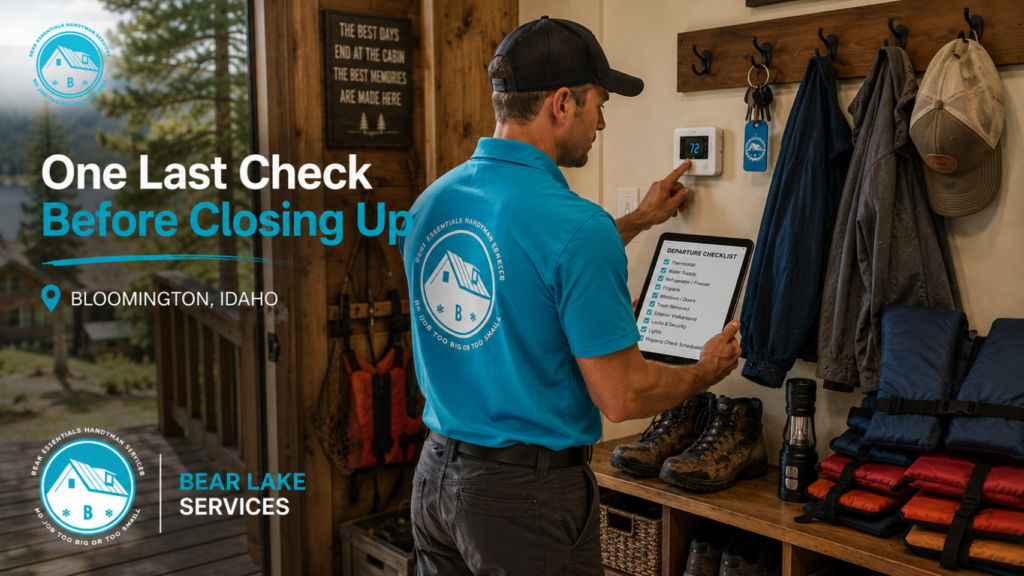
A useful departure routine follows the same path each time:
- Start inside the cabin.
- Check the utilities and mechanical systems.
- Walk around the exterior.
- Confirm the property is secure.
- Decide who will check it while you are gone.
Following the same order makes it less likely that a small task will be forgotten during a rushed departure.
Should I Turn Off the Water Before Leaving?
There is no single answer for every cabin.
The decision depends on:
- How long the cabin will be vacant
- Whether the property will remain heated
- Whether freezing temperatures are possible
- The plumbing layout
- The water-heater requirements
- Whether appliances need an active water supply
- Whether the property will be professionally winterized
Before leaving, check visible areas under sinks, around toilets, near the water heater, and around appliance supply lines for moisture or active dripping.
If you plan to shut off the main water supply, first confirm how that decision affects the water heater, boiler, fire-suppression system, refrigerator, ice maker, and other connected equipment. Follow the manufacturer’s instructions and consult a qualified professional when the system is unfamiliar.
For a seasonal closure, simply turning off one valve is not always the same as winterizing the plumbing. Extreme cold can freeze and rupture water pipes, and federal winter-preparedness guidance recommends taking steps to protect plumbing before freezing weather.
Before You Leave
- Check beneath every accessible sink.
- Look around toilets and visible supply connections.
- Inspect the water-heater area for moisture.
- Confirm that faucets are fully closed.
- Disconnect outdoor hoses where appropriate.
- Follow the cabin’s established water-shutoff or winterization procedure.
- Do not improvise a full plumbing winterization without understanding the system.
Should I Turn the Heat or Air Conditioning Off?
That depends on the season and whether the cabin is being winterized.
During warm weather, owners often adjust cooling instead of maintaining the same comfort setting used while the cabin is occupied. During cold weather, turning the heating system completely off can expose plumbing and interior components to freezing unless the building has been properly winterized.
A thermostat regulates the heating or cooling system based on its setpoint, but the appropriate setting varies by property, equipment, moisture conditions, and season. Avoid choosing a universal number without considering the cabin’s systems.
Before departure:
- Confirm that the thermostat is in the intended mode.
- Replace weak thermostat batteries when applicable.
- Make sure supply and return vents are not blocked.
- Check that the outdoor condenser is not surrounded by weeds, pine needles, or stored objects.
- Review any alerts from a smart thermostat.
- Arrange HVAC service if the system has been noisy, unreliable, or unable to maintain temperature.
Do not assume that a smart thermostat replaces an in-person property visit. It may report temperature or connectivity, but it cannot confirm whether a branch has fallen, a window has broken, water is visible on the floor, or the condenser has become obstructed.
What Should I Do With the Refrigerator?
First decide whether the refrigerator will stay on.
If It Will Stay On
Remove food that is likely to spoil before your return. Wipe up spills, confirm the doors close completely, and avoid leaving items you would not want sitting through an extended power interruption.
The CDC notes that an unopened refrigerator generally keeps food cold for about four hours during a power outage. A full freezer may maintain a safe temperature for approximately 48 hours, or about 24 hours when half full, if the door remains closed. That means food can become unsafe during an extended outage even when the refrigerator was operating normally when you left.
Remove or use:
- Open dairy products
- Leftovers
- Cut produce
- Raw meat or seafood
- Food approaching its use-by date
- Anything likely to leak, ferment, or create odors
If It Will Be Turned Off
Follow the appliance manufacturer’s instructions. In general, the refrigerator should be emptied and cleaned rather than switched off with food still inside. Some manufacturers recommend leaving cleaned doors open during extended shutdowns to reduce trapped moisture and odors, but the correct procedure should come from the manual for that appliance.
Do not switch off a refrigerator or freezer containing food and assume the contents will remain safe.
Should I Check the Propane Tank Before Leaving?
Yes, when the cabin uses propane.
Check the visible tank gauge and determine whether the remaining supply is appropriate for the length of the absence and the appliances that will continue operating.
This becomes especially important when propane supplies:
- Space heating
- A water heater
- A range
- A fireplace
- A standby generator
- Other essential equipment
Arrange delivery before departure when the level is lower than your established refill point. Do not make untrained changes to regulators, valves, or gas connections. Contact the propane supplier if you smell gas, suspect a leak, or are unsure how a system should be placed into seasonal service.
Also confirm that the supplier and local emergency contact have accurate owner contact information.
What Should I Do With Trash, Food, and Cleaning Supplies?
Remove all household trash before leaving, including waste from bathrooms, bedrooms, and outdoor areas.
Do not focus only on the kitchen bag. Commonly forgotten items include:
- Food in bedroom wastebaskets
- Disposable coffee pods
- Grill drippings or grease containers
- Pet waste
- Open beverages
- Bait or fishing supplies
- Damp towels
- Wet cleaning cloths
- Food stored in vehicles, garages, or mudrooms
Wash dishes, run or empty the dishwasher as appropriate, and avoid leaving damp laundry in the washer.
Food residue and unsecured waste can create odors and attract insects or wildlife. Trash should be placed in the correct secured receptacle or removed from the property according to local collection arrangements.
Do I Need to Clear Weeds and Pine Needles Before Leaving?
Inspect the area immediately around the cabin, deck, stairs, HVAC equipment, propane tank, and outbuildings.
The U.S. Fire Administration advises keeping the first five feet around a home free of combustible materials such as dead vegetation, pine straw, woodpiles, flammable mulch, and man-made trash. It also recommends clearing gutters and the areas beneath decks.
Before leaving:
- Remove dead vegetation touching the structure.
- Clear pine needles and leaves from decks and entry areas.
- Do not store firewood against the cabin.
- Check beneath decks for accumulated debris.
- Keep vegetation from obstructing the outdoor condenser.
- Arrange lot or brush clearing when growth exceeds what can be handled safely during departure.
This does not make a property fireproof. It is one part of ongoing property maintenance and wildfire preparedness.
What Should I Check Outside the Cabin?
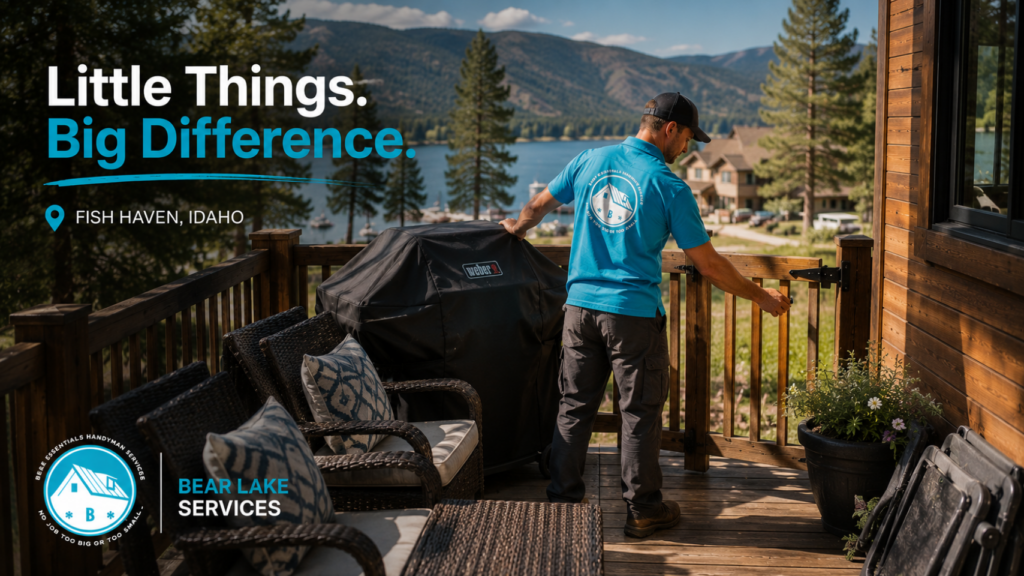
Complete the exterior walkaround before the vehicle is fully packed so tools and supplies are still accessible if you find something small.
Final Exterior Walkaround
| Area | What to look for | What to do before leaving |
|---|---|---|
| Roof edge and gutters | Debris, visibly displaced materials, overflowing sections, or loose downspouts | Arrange service for anything unsafe or beyond ground-level reach. |
| Soffit and fascia | Loose sections, openings, stains, or visible animal access | Photograph the concern and schedule repair. |
| Windows and doors | Cracked glass, damaged screens, failed latches, or gaps | Secure or repair the opening before departure. |
| Deck and stairs | Loose boards, unstable railings, debris, or slippery growth | Address immediate safety concerns and schedule repairs. |
| HVAC condenser | Weeds, pine needles, branches, or stored items restricting the surrounding area | Clear light debris safely; schedule service for mechanical concerns. |
| Driveway and access | Washouts, fallen limbs, blocked gates, or poor access | Restore access or arrange follow-up work. |
| Grounds | Dead vegetation, trash, leaning branches, or storm debris | Remove manageable debris and arrange clearing where needed. |
| Outdoor furniture | Loose covers, umbrellas, lightweight chairs, or items exposed to wind | Secure or store them. |
Do not climb onto the roof for a departure-day inspection. Use a ground-level visual check and contact a qualified provider when closer assessment is needed.
How Do I Secure the Cabin Before Driving Away?
Check every door and accessible window rather than relying on memory.
Before leaving:
- Lock exterior doors.
- Confirm windows are fully closed and latched.
- Secure sliding doors according to the manufacturer’s design.
- Lock garages, sheds, crawl-space doors, and utility spaces.
- Close and secure gates.
- Remove spare keys from obvious outdoor locations.
- Test exterior lights when they are intended to remain active.
- Confirm security cameras and internet-dependent devices are online.
- Update emergency contacts and access instructions when codes have changed.
Avoid publishing exact vacancy dates or access details publicly.
What If I Find a Repair During the Final Walkaround?
Decide whether it is:
- An immediate safety or security issue
- A problem that could worsen while the cabin is vacant
- A routine repair that can be scheduled later
A Quick Decision Guide
| What you find | Best next step |
|---|---|
| Active leak, gas odor, electrical hazard, fire, or immediate threat | Leave the affected area and contact the appropriate emergency service or qualified utility provider. |
| Broken window, failed lock, or unsecured entry | Secure the property before leaving or arrange an immediate response. |
| Loose gutter, damaged screen, minor deck concern, or small exterior repair | Photograph it and schedule handyman service. |
| Brush growth, pine-needle accumulation, or blocked HVAC clearance | Clear manageable debris or arrange property cleanup. |
| Possible roof, structural, or major system damage | Avoid unsafe inspection and contact an appropriately qualified professional. |
| No visible problem, but the cabin will sit vacant | Schedule a property check and confirm a local emergency contact. |
Do I Need Someone to Check the Cabin After I Leave?
A local contact becomes more useful as the time between owner visits increases.
That person may be a neighbor, relative, property manager, or professional maintenance provider. What matters is that expectations are clear.
Confirm:
- How often the cabin will be checked
- Whether visits include the interior, exterior, or both
- What photographs or reports will be provided
- Who should be contacted first
- What qualifies as an emergency
- Whether the person may meet contractors
- How the cabin can be accessed
- What spending or repair authority, if any, has been approved
A scheduled property check is not the same as a professional home inspection, guaranteed security service, or continuous monitoring. Its purpose is to identify visible changes, document conditions, and notify the owner when something may need attention.
What If I’m Leaving for Winter?
A winter closure requires more planning than a month-long summer absence.
Bear Lake-area properties can experience freezing temperatures, snow, wind, and difficult access. Federal guidance warns that freezing conditions can damage water pipes, while regional National Weather Service records document significant snow and wind events in southeastern Idaho.
A professional winterization plan may involve:
- Water-supply decisions
- Draining specific plumbing components
- Water-heater procedures
- Antifreeze approved for appropriate plumbing applications
- HVAC and thermostat planning
- Appliance preparation
- Exterior hose and irrigation procedures
- Propane planning
- Snow-removal arrangements
- Periodic property checks
The exact procedure depends on the cabin. Do not copy a generic checklist that ignores your water source, septic system, heating system, or manufacturer instructions.
The Final Ten-Minute Cabin Check

Before pulling out of the driveway, pause and complete one final pass.
Inside
- Trash removed
- Perishable food addressed
- Dishes and damp laundry handled
- Faucets closed
- Visible plumbing areas dry
- Thermostat in the intended mode
- Refrigerator decision completed
- Windows shut and latched
- Interior doors positioned as planned
- Nonessential appliances unplugged when appropriate
Outside
- Exterior doors locked
- Outdoor furniture secured
- Grill and fire-related items handled safely
- Dead vegetation and debris checked
- HVAC condenser area clear
- Driveway accessible
- Gates and outbuildings secured
- Cameras or monitoring devices online
Before You Leave
- Local contact confirmed
- Property-check schedule confirmed
- Contractor appointments shared
- Emergency access instructions current
- Photos taken of the cabin’s condition
- Final walkthrough completed
Taking departure photos can also create a dated record of how the cabin looked when you left.
Need Help Closing Up or Checking Your Cabin After You Leave?
Bear Lake Services’ Monthly Emergency Contact & Property Check Program is designed for seasonal and out-of-town cabin owners who want a dependable local point of contact after heading home.
Depending on the selected plan, support may include:
- Scheduled property checks
- Exterior and interior observations
- Photo reports and written visit updates
- Local emergency-contact support
- Contractor access and coordination when arranged
- A prepaid first hour for qualifying emergency call-outs
- Waived trip charges for qualifying maintenance visits under the program
Bear Lake Services assists cabin owners in Fish Haven, Garden City, Bloomington, St. Charles, Laketown, and surrounding Bear Lake communities.
Learn more about the Monthly Emergency Contact & Property Check Program or contact Bear Lake Services at +1 208-852-8896 to discuss the right departure and check schedule for your cabin.
Frequently Asked Questions
What should I do before leaving my cabin for one month?
Remove trash and food likely to spoil, inspect visible plumbing areas, confirm the thermostat and utility settings, secure windows and doors, complete an exterior walkaround, and arrange a local property check.
Should I shut off the water when leaving my vacation home?
It depends on the plumbing system, season, appliances, and whether the property will remain heated. Confirm the correct procedure for the cabin rather than assuming that shutting one valve fully winterizes the property.
Can I turn the heat off if nobody will be there?
Turning the heat off may expose plumbing to freezing unless the cabin is properly winterized. Use a property-specific plan based on the heating system, plumbing layout, and manufacturer guidance.
Should I empty the refrigerator?
Remove food that could spoil before your return. If the appliance will be switched off, empty and clean it and follow the manufacturer’s shutdown instructions.
What should I check outside before leaving?
Check doors, windows, screens, decks, gutters visible from the ground, HVAC equipment, vegetation, driveway access, outdoor furniture, and debris near the cabin.
Who can check my cabin after I go home?
A trusted neighbor, relative, property manager, or local cabin-maintenance provider can perform scheduled visits when expectations, access, documentation, and emergency procedures are agreed upon in advance.
Is closing a cabin the same as winterizing it?
No. Closing the cabin may mean cleaning, securing it, and adjusting utilities for a temporary absence. Winterization is a more specific process intended to prepare systems for freezing conditions and extended seasonal vacancy.
Sources
- National Weather Service — Bear Lake Valley Forecast and Regional Weather Information.
- Ready — Winter Weather and Home Preparation.
- Centers for Disease Control and Prevention — Winter Weather and Frozen-Pipe Safety.
- Centers for Disease Control and Prevention — Food Safety During a Power Outage.
- U.S. Fire Administration — Defensible Space and Wildland-Urban Interface Preparation.