

15 Oct Snow Removal Bear Lake Idaho: Cabin Owner Winter Guide
If you own a cabin around Bear Lake, the first snow-removal decision of winter should probably happen before there is snow sitting in the driveway.
For a full-time resident, an unplanned snowfall can mean changing the morning schedule and dealing with the property when you wake up. For a seasonal or out-of-town cabin owner, the situation is different. You may arrive after snow has already accumulated, need access for a guest or service provider, or simply have no one at the property to see what conditions look like.
That makes planning for snow removal in Bear Lake, Idaho less about reacting to a weather forecast and more about answering a few practical questions in advance: What areas actually need to stay accessible? Does the property need driveway service only, or are decks and other areas part of the plan? Who handles the property when you’re away? And what happens when snow accumulation creates a different problem on the roof?
Here is what to work out before the first significant storm.
What Snow Removal Does Your Bear Lake Cabin Actually Need?
“Snow removal” can describe several very different jobs.
One property may primarily need the driveway cleared so the owner can reach the cabin. Another may have stairs, walkways or a deck that also needs attention. A seasonal property that sits empty for extended periods creates a different situation again because no one may be there to evaluate what accumulated between visits.
Bear Essentials Handyman Services lists snow removal among its exterior and seasonal services, alongside roof work, ice-dam service, gutters and other year-round property care. The company also provides property maintenance and seasonal support for cabins and homes around Bear Lake.
So before arranging Bear Lake snow removal, start with the property rather than the generic service name.
Ask: What needs to remain usable after it snows?
Walk through a normal winter arrival in your head.
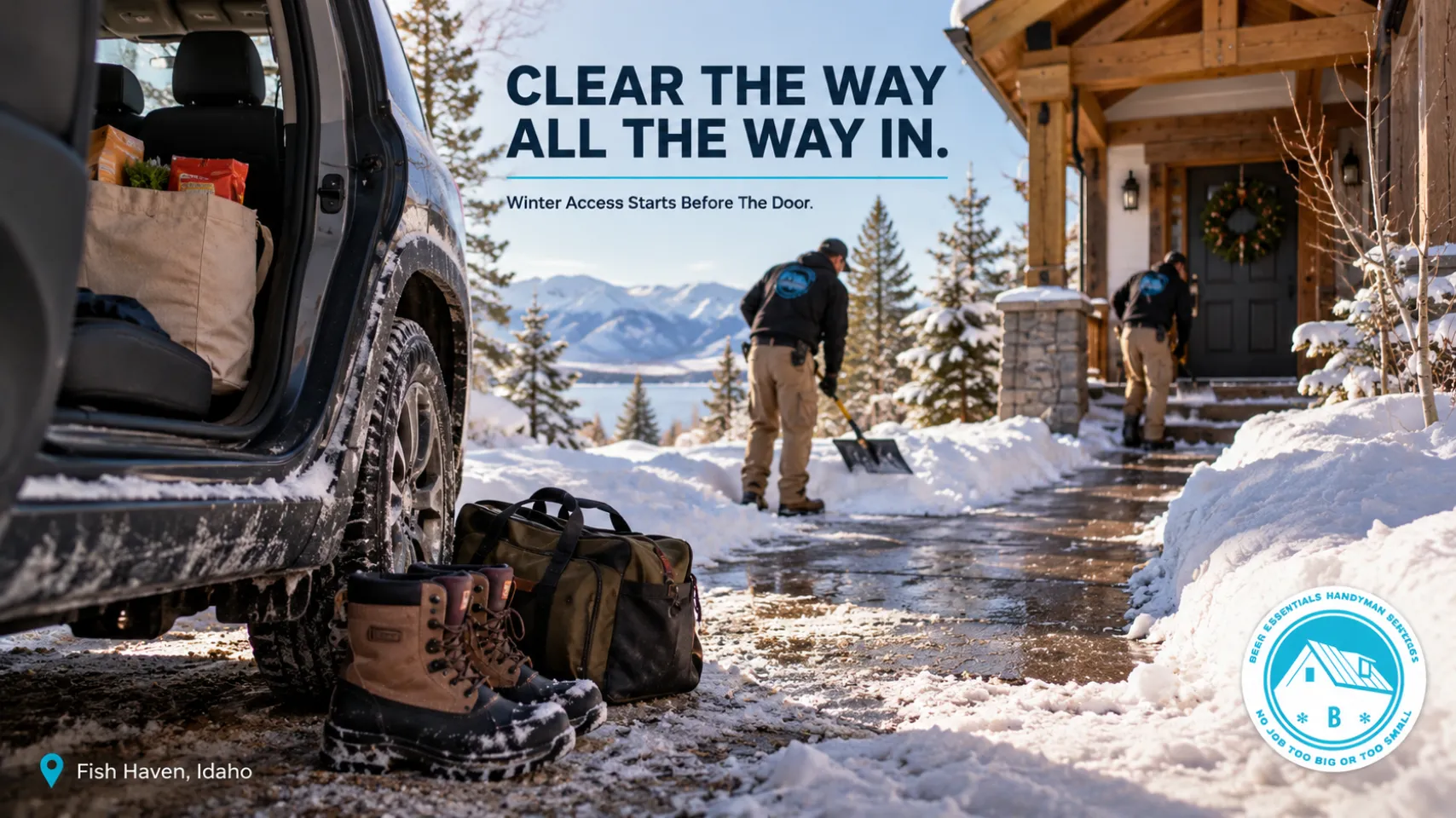
Where do you drive? Where do you park? Which entrance do you normally use? Is there a walkway between parking and the cabin? Are there exterior stairs? Do you use the deck during winter? Does a propane delivery, maintenance technician or other service provider need access somewhere else on the property?
Those questions help define the actual scope.
You don’t necessarily need every area cleared after every snowfall. The important thing is deciding what your property requires before conditions make that decision for you.
Should I Arrange Snow Removal Before the First Storm?
If you know the cabin will need winter access, arranging the service in advance can eliminate one decision you would otherwise have to make after snow arrives.
That does not mean anyone can accurately predict the entire 2026–27 Bear Lake snow season in October. Snowfall and individual storm conditions vary, and we should be cautious about treating a seasonal outlook as a guarantee of what will happen at one property.
Planning doesn’t require a prediction.
You already know whether you intend to visit the cabin during winter, whether guests or renters may need access, and whether the property will spend long periods unattended. Those are enough reasons to establish what you want handled and who you will contact when conditions require service.
For anyone driving to a Bear Lake property during winter, road conditions are another part of the equation. The Idaho Transportation Department recommends checking Idaho 511 before travel and notes that winter driving requires slower speeds, additional following distance and preparation for changing snow and ice conditions.
Clearing your private driveway, of course, doesn’t tell you whether the highway leading to it is safe. Treat those as two separate decisions.
Is Driveway Snow Removal Enough for a Cabin?
Sometimes, yes.
If the only winter objective is getting a vehicle from the road to a usable parking area, the driveway may be the primary concern. But that shouldn’t be assumed for every property.
Think about what happens after you park.
If you still have to cross an uncleared walkway, climb exterior stairs or reach an entry that hasn’t been considered in the snow-removal plan, a cleared driveway has solved only part of the access problem.
This is especially relevant when someone other than the owner may visit the property. A cabin check, repair appointment or other service call still depends on being able to reach the area where work needs to happen.
The better question isn’t: “Do I need snow removal?”
It’s: “What needs to be accessible at this property when snow is on the ground?”
That produces a much more useful scope.
What About Snow on My Cabin Deck?
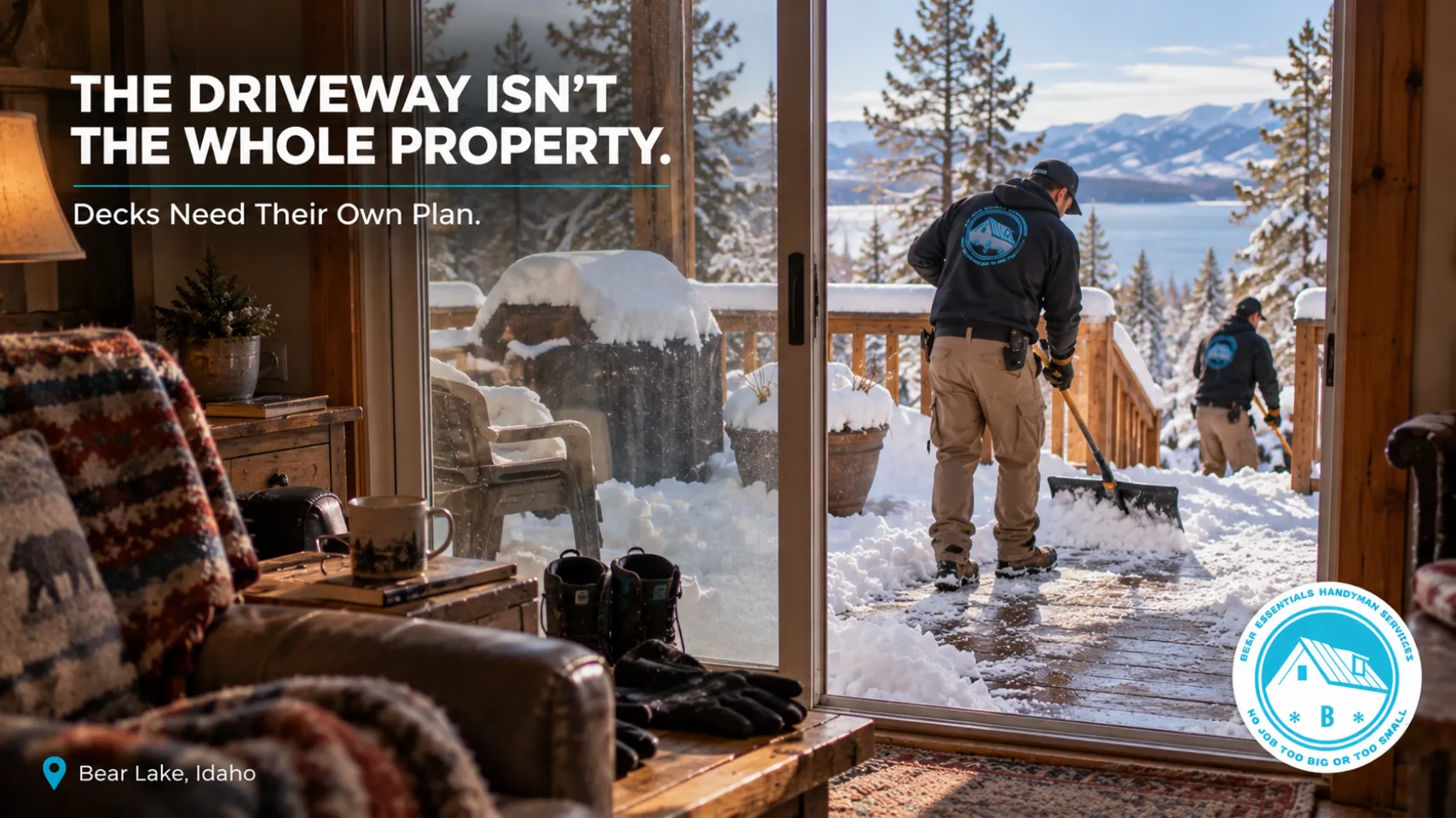
Deck snow deserves its own decision rather than being automatically bundled into driveway service.
First determine whether the deck needs to remain usable during winter. A deck that provides access to an entrance creates a different situation from one that will simply sit unused until spring.
The structure itself also matters. You cannot determine how much snow a particular deck or roof can safely support from a generic internet depth chart alone. Snow weight changes with water content, and structural capacity depends on the structure’s design and condition.
That same principle is well established in federal roof-snow guidance. OSHA notes that snow load varies with water content and that roof loads are also affected by factors including drifting, melting and refreezing, roof slope and structural design.
So avoid rules like “remove snow whenever it reaches X inches” unless that threshold comes from information applicable to the actual structure.
Our next article in this series will go deeper into snow removal on Bear Lake cabin decks, including what owners should evaluate before deciding when and how a deck needs attention.
When Does Roof Snow Become a Different Decision?
This is where ordinary property snow removal becomes a more specialized safety and structural question.
Seeing snow on a roof does not automatically mean the roof is overloaded. Depth alone doesn’t tell you the load because different snow conditions can have very different weights. Roof design, drifting, prior accumulation, melting and refreezing, and the condition of the structure can all matter.
FEMA’s current Snow Load Safety Guide says knowing a structure’s design snow load is important when determining when snow removal should begin. If drawings aren’t available and structural capacity is a concern, FEMA recommends involving a licensed design professional rather than guessing.
Roof snow removal also introduces hazards that driveway clearing does not.
OSHA identifies falls as a major hazard during snow removal from rooftops and elevated surfaces. Snow can conceal skylights and other hazards, ice makes surfaces slippery, and snow-loaded structures must be evaluated before workers access them. OSHA recommends using methods that keep workers off roofs when feasible and appropriate.
That is why driveway snow removal, deck snow removal and roof snow removal shouldn’t be treated as interchangeable versions of the same job.
Should I Remove Snow From the Roof Myself?
Roof snow removal deserves considerably more caution than shoveling an ordinary ground-level area.
FEMA warns that snow removal is hazardous and should be performed by qualified individuals following appropriate safety procedures. Its guidance also warns against completely scraping a roof surface bare, using sharp tools, creating unbalanced loading or stockpiling removed snow elsewhere on the roof.
OSHA similarly identifies fall, structural, electrical and equipment hazards associated with rooftop snow removal.
If you are concerned that accumulated snow is affecting the structural safety of a cabin, that is not the time to climb onto the roof and experiment.
Have the condition appropriately evaluated.
Is an Ice Dam the Same Thing as Too Much Snow on the Roof?
No.
They can occur during the same season and may both involve snow on a roof, but they are different problems.
An ice dam develops when snow melts on a warmer portion of a roof and the water reaches a colder portion near the eaves, where it refreezes. Repeated melting and freezing can build a barrier of ice that interferes with drainage.
That means seeing ice along an eave doesn’t automatically tell you that the roof has “too much snow,” just as seeing snow on a roof doesn’t automatically mean an ice dam has formed.
We will cover that separately in What Causes Ice Dams on Cabin Roofs—and What Bear Lake Owners Should Watch For, because cabin owners are better served by understanding the difference than by treating every winter roof condition as a generic snow-removal problem.
What If I Don’t Live Near My Bear Lake Cabin?
This is where winter planning changes significantly.
If you’re at the cabin, you can look outside after a storm. You can see whether the driveway is accessible, whether drifting has changed conditions around the property or whether something simply looks different.
If you’re several hours away, you can’t.
A weather app can tell you about weather conditions. It cannot tell you exactly what is happening at your individual property.
Bear Essentials’ Monthly Emergency Contact & Property Check Program is designed for cabin, vacation-home, second-home and out-of-town property owners. The current program includes scheduled property checks, interior and exterior walkarounds, a written report with photos after every visit and local emergency-response support. It currently serves Garden City, Laketown, Fish Haven, St. Charles and Bloomington.
That program is not the same thing as snow removal. They solve different problems.
Snow removal addresses the snow-related service you arranged. Property checks address the question of who is physically looking at the property when you’re not there.
For some seasonal owners, those two services can form different parts of the same winter property-maintenance plan.
What Should I Decide Before Leaving the Cabin for Winter?
You don’t need a complicated winter binder. You do need clarity about who is responsible for what.
Bear Essentials’ existing cabin-closing guidance recommends considering plumbing and water-supply decisions, heating and HVAC, appliances, exterior hoses and irrigation, propane, snow-removal arrangements and periodic property checks when planning a seasonal winter closure. The exact procedure depends on the individual cabin and its systems.
For snow specifically, I would make these decisions before leaving:
Which areas need snow removal? Decide whether you’re planning for the driveway only or whether walkways, stairs, decks or other areas need to be discussed.
Will anyone use the property during winter? Your own visits, guests, rental stays and service appointments can change access requirements.
Who is your snow-removal contact? Don’t make yourself restart a “snow removal near me” search during the first storm if you already know you’ll need the service.
Who looks at the cabin while you’re away? Snow removal and property monitoring aren’t identical.
Who do you contact about roof snow or ice? Establish that before you are trying to solve an unfamiliar roof condition remotely.
How Should I Compare Snow Removal Services in Bear Lake?
Price matters, but a useful comparison starts with whether you’re actually comparing the same scope.
One quote might address only a driveway. Another could involve additional access areas. Property layout, service expectations and the type of snow-removal work can differ, so a dollar figure without the scope doesn’t tell you very much.
Before hiring, ask what areas are included, how service requests are handled, whether roof or deck snow removal is a separate service, and how you’ll communicate if you’re away from the property.
For seasonal owners, that last question is particularly important. Someone clearing snow and someone checking the condition of your cabin are not necessarily performing the same service.
What Should Bear Lake Cabin Owners Do Before the First Storm?
Start with your own property.
Walk the driveway. Decide where vehicles need to go. Follow the route from the parking area to the door you’ll actually use. Look at the stairs and deck. Think about which areas another person might need to reach while you’re away.
Then separate the winter jobs into categories:
Access: driveway, parking, walkway and entry areas.
Seasonal property care: winterization, maintenance and periodic checks.
Elevated snow: decks and roofs, evaluated according to the property and structure.
Roof problems: snow accumulation, ice dams or other conditions that may require a different type of response.
That is a much better winter plan than waiting until the first significant snowfall and treating everything covered in white as the same problem.
Planning Snow Removal in Bear Lake, Idaho
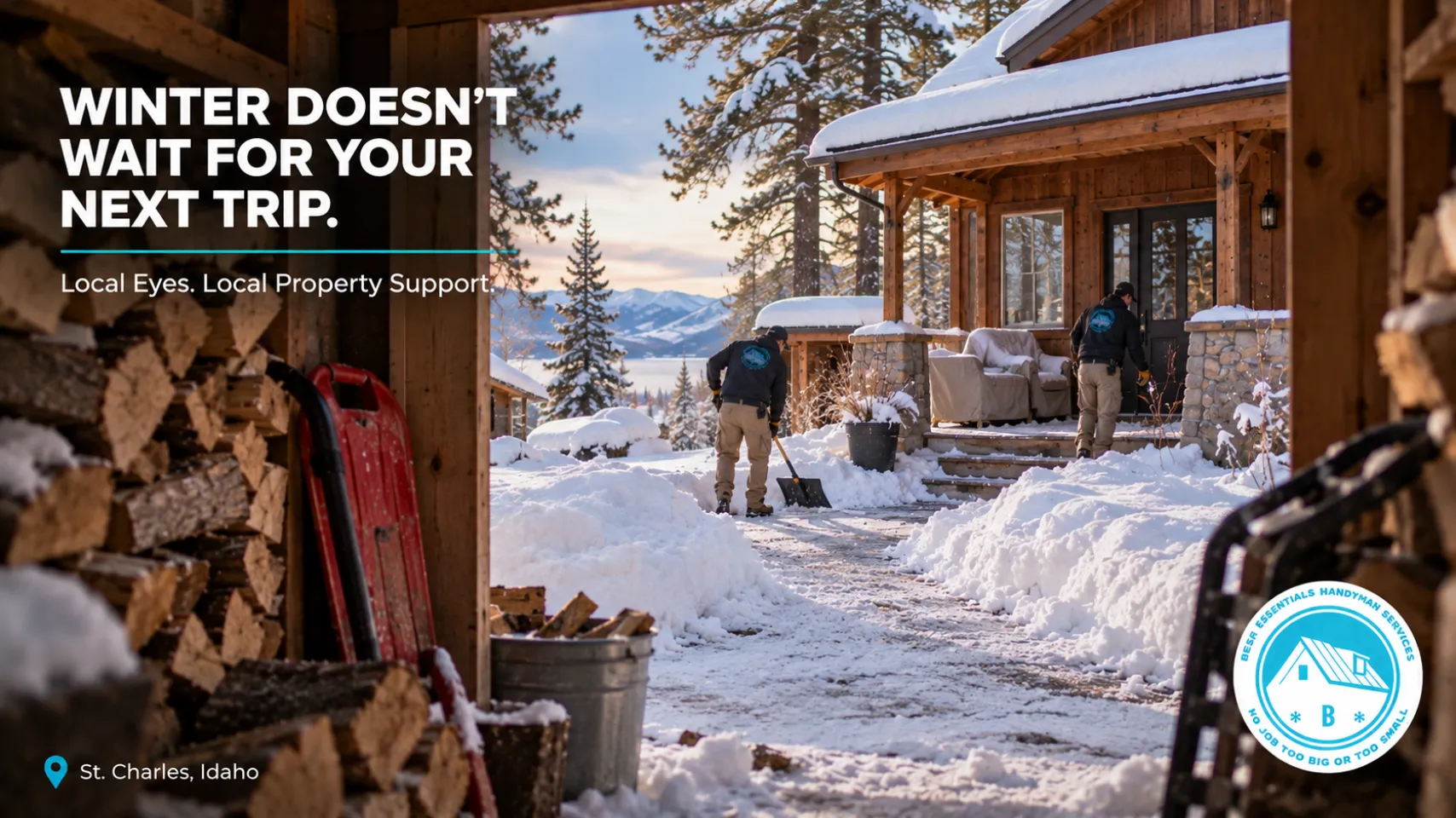
Bear Essentials Handyman Services provides year-round property care from Fish Haven and lists snow removal, ice-dam service and other exterior and seasonal work among its services for Bear Lake homes and cabins.
If you need snow removal in Bear Lake, Idaho, the best place to start is with the actual property: tell the team where the cabin is, what areas need to remain accessible and whether you’re a full-time or seasonal owner.
For owners who spend winter away from Bear Lake, you can separately ask about the Monthly Emergency Contact & Property Check Program, which currently starts at $150 per month and includes scheduled visits and written photo reports.
The goal isn’t to predict exactly when the first big storm will arrive.
It’s to know what happens at your cabin when it does.
Frequently Asked Questions
When should I arrange snow removal for my Bear Lake cabin?
If you know you’ll require winter access, it makes sense to establish your service needs before significant snow arrives rather than waiting until the property is already difficult to access. Determine which areas need attention and how service will be requested.
Does cabin snow removal include the driveway, deck and roof?
Do not assume those are automatically one service. Driveways, decks and roofs present different access, structural and safety considerations. Confirm the exact scope with the provider before winter.
How much snow is too much for a cabin roof?
There is no reliable universal snow-depth number for every roof. Snow load depends partly on the snow’s water content, while roof capacity depends on the structure’s design and condition. FEMA advises using the structure’s design snow load and qualified professional evaluation when determining whether structural snow accumulation is a concern.
Can I remove snow from my cabin roof myself?
Roof snow removal involves serious fall and structural hazards. OSHA and FEMA provide specific safety guidance for this work and recommend qualified approaches rather than treating it like ordinary ground-level shoveling.
What if I live out of state and can’t check my cabin after a storm?
Consider separating snow removal from property monitoring. Bear Essentials’ Monthly Emergency Contact & Property Check Program provides scheduled property visits and written photo reports for participating properties in Garden City, Laketown, Fish Haven, St. Charles and Bloomington.