


16 Aug What Should a Cabin Maintenance Company Check During Every Property Visit?
Written by Stu, Lead Technician at Bear Lake Services, helping cabin owners, vacation rental hosts, and seasonal property owners with handyman services, HVAC-related maintenance checks, monthly cabin checks, lot clearing, and property maintenance throughout Fish Haven, Bear Lake, Bloomington, Garden City, and surrounding communities.
When a Bear Lake cabin sits empty between weekends, rental stays, or seasonal visits, the most useful property check is not a quick drive-by.
A proper visit should answer practical questions:
- Is the cabin secure?
- Is there any visible water where it should not be?
- Are the heating, cooling, or propane systems showing obvious concerns?
- Have wind, wildlife, vegetation, or changing weather affected the property?
- Does anything need attention before the owner returns?
- Will the owner receive photographs and a written update?
A cabin maintenance company should inspect the property consistently, document what was observed, and explain what requires follow-up. It should not claim to perform a full home inspection or diagnose regulated systems unless the person completing that work is properly qualified for the scope.
For seasonal and out-of-town owners, the value of a property visit is simple: someone local is checking the cabin based on an agreed checklist instead of waiting for a guest, neighbor, storm, or unexpected repair to reveal the problem.
What should be checked during a cabin property visit?
The exact checklist should match the cabin, season, occupancy, and services selected. A useful routine visit usually covers five areas: the interior, exterior, mechanical equipment, basic safety and security, and documentation.
Cabin Property Check Checklist
| Area | What should be observed | What the owner should receive |
| Interior | Visible water, unusual odors, doors, windows, toilets, sinks, appliances, indoor temperature, and signs of pests or intrusion | Notes and photographs of anything unusual |
| Exterior | Siding, decks, stairs, railings, visible roof edges, gutters, downspouts, screens, driveway access, storm debris, vegetation, and outbuildings | Exterior condition photos and identified maintenance needs |
| Mechanical | Thermostat status, visible HVAC condition, filter status when included, outdoor condenser clearance, propane gauge when requested, and accessible water-heater area | Current readings or observations without unsupported diagnosis |
| Safety and security | Locked doors and windows, damaged entry points, exterior lighting, gates, visible hazards, and access concerns | Confirmation of the property’s observed security condition |
| Documentation | Date of visit, areas checked, photographs, visible changes, completed work, and recommended follow-up | A written report after the visit |
A property check should focus on observable conditions. If the visit reveals a possible electrical, plumbing, HVAC, roofing, propane, structural, or other technical problem, the next step may require an appropriately qualified service provider.
Should someone walk through the inside of the cabin?
When interior access is part of the service agreement, an interior walk-through can identify visible changes that an exterior visit cannot.
The person checking the cabin may look for:
- Water beneath accessible sinks
- Moisture around toilets or visible supply lines
- Water near the refrigerator, dishwasher, washing machine, or water heater
- Unusual indoor temperature
- Doors or windows that are open, damaged, or unsecured
- Evidence of insects, rodents, or wildlife
- Unusual odors
- Appliances that appear to have lost power
- Interior damage reported by a guest, cleaner, or contractor
- Obvious changes since the previous visit
This is not the same as opening walls, testing every appliance, performing mold sampling, or conducting a professional building inspection.
The purpose is to notice visible concerns and report them while the owner still has time to decide what to do.
Should someone check for water leaks?
Yes. Visible water should be part of a routine interior property check.
Water damage can begin with a failed supply line, plumbing fixture, appliance connection, roof opening, frozen pipe, or exterior drainage problem. A routine visit cannot guarantee that every hidden leak will be found, but it can include checking accessible areas where moisture may be visible.
A cabin maintenance visit may include looking:
- Beneath sinks
- Around toilets
- Near tubs and showers
- Around the water heater
- Beside the washing machine
- Near the refrigerator or ice-maker supply
- Around exterior doors and windows
- At ceilings or walls for new visible staining
- In accessible utility areas
The Environmental Protection Agency advises addressing moisture problems promptly because controlling moisture is central to preventing mold growth.
If active water is found, the appropriate response depends on the source and severity. It may involve notifying the owner, shutting off water when authorized and safe, documenting the condition, and contacting a qualified plumber or other provider.
A routine property checker should not guess about the source or promise that visible inspection rules out concealed water damage.
Should someone check the windows, doors, and screens?
Yes. Windows, doors, and screens are practical parts of both security and property maintenance.
The person visiting the cabin should look for:
- Windows that are open or unlocked
- Cracked or visibly damaged glass
- Torn or displaced screens
- Doors that do not appear fully closed
- Failed locks or latches
- Gaps around exterior entries
- Evidence of forced entry
- Wildlife or insect access points
- Water staining around openings
- Windblown debris near entryways
A damaged screen may appear minor, but it can allow insects or small animals inside. A failed latch or broken window may require more immediate attention because the property cannot be secured properly.
The report should distinguish between a cosmetic issue, a routine repair, and a security concern.
Should the HVAC system be checked?
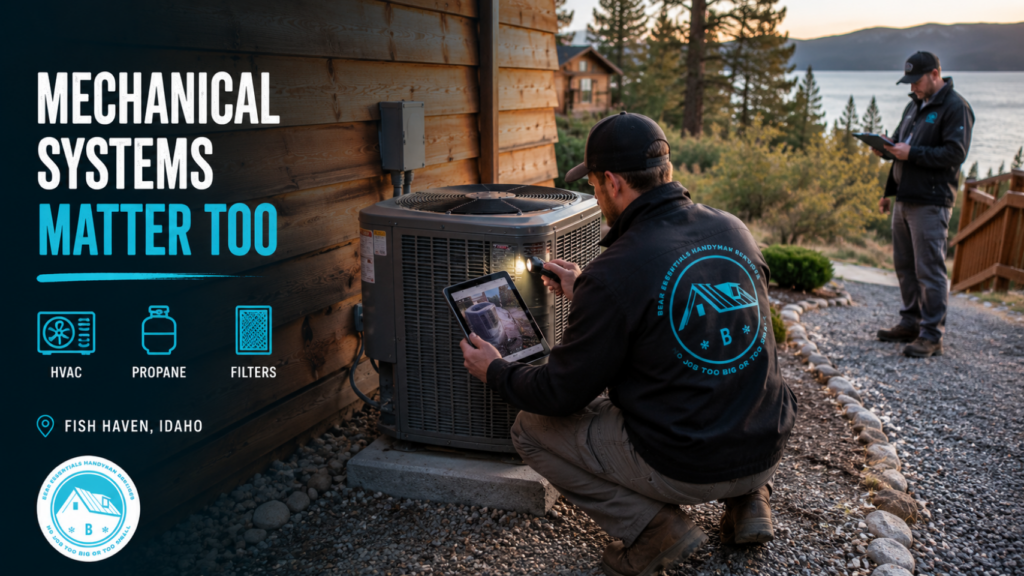
A routine property visit can include basic HVAC observations, but it should not be presented as a full HVAC service appointment.
The visit may include:
- Confirming the thermostat is powered
- Recording the displayed indoor temperature
- Confirming the system is in the intended mode
- Looking for visible alerts on the thermostat
- Checking the filter when replacement is included
- Observing the accessible furnace or mechanical area
- Looking at the outdoor condenser from a safe position
- Checking whether weeds, leaves, pine needles, or stored items are obstructing the unit
- Noting whether the condenser appears visibly shifted or uneven
The U.S. Department of Energy states that dirty, clogged air filters reduce airflow and system efficiency. DOE also recommends regular air-conditioner maintenance and keeping airflow around condensing equipment unobstructed.
That does not mean a handyman or property checker should diagnose refrigerant, electrical, compressor, combustion, or internal equipment problems without the appropriate qualifications.
If the unit is not operating normally, the owner should be informed and HVAC service can be arranged.
Should someone check whether the outdoor AC unit is level?
A visibly tilted or shifting outdoor condenser is worth documenting.
The unit normally sits on a pad or stable base. Soil movement, erosion, vegetation, or settling may affect the area around it. During a property visit, the technician can photograph the unit and note whether it appears visibly out of level or whether the pad has shifted.
A visual observation is not the same as diagnosing equipment damage.
The next step may be:
- Clearing light vegetation or debris where authorized.
- Photographing the current condition.
- Comparing it with earlier visit photos.
- Recommending HVAC evaluation if performance or equipment condition is in question.
This is exactly the kind of gradual change that scheduled property checks can help document over time.
Should someone check the propane tank?
When propane monitoring is part of the agreement, the visible tank gauge can be checked and reported to the owner.
The Propane Education & Research Council recommends checking the propane gauge regularly so users know how much fuel remains. It also warns that propane systems require specific safety procedures, particularly if a tank becomes empty or a leak is suspected.
A routine visit may include:
- Photographing the gauge
- Reporting the indicated level
- Checking whether access to the tank is obstructed
- Observing whether vegetation or debris has accumulated nearby
- Notifying the owner when the level has reached the owner’s established refill point
The person performing the visit should not alter propane regulators, repair gas lines, relight equipment, or diagnose a suspected leak unless properly trained and authorized.
If propane odor is detected or a leak is suspected, occupants should leave the area and follow emergency guidance from the propane supplier and emergency services.
What should be checked outside the cabin?
An exterior walkaround should cover the cabin and the immediately surrounding property.
The technician may look at:
- Exterior doors and windows
- Screens
- Siding and trim
- Decks, stairs, and railings
- Soffit and fascia
- Roof edges visible from the ground
- Gutters and downspouts
- Exterior lighting
- Driveway and walking access
- Gates and fencing
- Fallen branches
- Storm debris
- Signs of wildlife activity
- Vegetation near the structure
- Outdoor HVAC equipment
- Propane access
- Sheds and other agreed outbuildings
The person should not climb onto a roof during a routine walkaround unless roof access is specifically included and can be performed safely within the provider’s capabilities.
Anything that cannot be safely inspected from the ground should be documented and referred for appropriate follow-up.
Should vegetation and brush be checked every visit?
Vegetation changes throughout the growing season, so it should be observed during exterior visits.
Around a Bear Lake cabin, the technician may note:
- Tall weeds against siding or decks
- Dry grasses near the structure
- Pine needles in gutters or beneath decks
- Branches blocking driveways or walkways
- Vegetation crowding the outdoor condenser
- Firewood stored against the cabin
- Brush affecting access to propane, utility, or emergency areas
- Regrowth in an area that was previously cleared
The U.S. Fire Administration recommends keeping the first five feet around a home clear of combustible materials such as dead vegetation, pine straw, woodpiles, flammable mulch, and trash. It also recommends cleaning gutters and the area beneath decks.
Farther from the structure, USFA recommends pruning dead material and reducing vegetation that could carry fire toward a building.
A property visit cannot make a cabin fireproof. It can identify vegetation conditions that may justify cleanup, lot clearing, or a more detailed wildfire-preparedness review.
Should gutters, soffits, and roof edges be included?
They should be observed from ground level when visible.
The checker may look for:
- Gutters pulling away from the structure
- Downspouts that appear disconnected
- Debris accumulation
- Water overflow staining
- Loose soffit or fascia
- Openings that may allow wildlife access
- Roof-edge material that appears displaced
- Branches contacting the cabin
- Visible storm damage
Ground-level observations cannot confirm the complete condition of a roof or gutter system. If the visit reveals a concern, closer inspection or repair may need to be scheduled separately.
The report should avoid definitive statements such as “the roof is good” based only on a ground-level walkaround. A more accurate note would be:
“No visible roof-edge damage was observed from the accessible ground-level areas during this visit.”
That language tells the owner what was and was not checked.
Should someone check the driveway and property access?
Yes, especially when the cabin is used seasonally or must remain accessible to guests, contractors, propane delivery, emergency responders, or maintenance crews.
The property visit may identify:
- Fallen limbs
- Gravel washouts
- Mud or standing water
- Damaged gates
- Overgrown vegetation
- Snow or ice during colder months
- Equipment or vehicles blocking access
- Erosion near the driveway
- Address numbers that are difficult to see
An accessible cabin is easier to service when repairs, deliveries, or emergency response are needed.
Property access should also be documented after major wind, rain, or snow events when conditions warrant a follow-up visit.
What safety and security items should be checked?
A property maintenance company is not necessarily a security company or fire inspector. However, a routine visit can include basic visible checks.
Examples include:
- Confirming agreed exterior doors are locked
- Confirming accessible windows appear closed
- Looking for broken glass or damaged locks
- Checking gates and outbuildings included in the visit
- Confirming exterior lights appear intact
- Noting visible trip hazards
- Looking for fallen branches near entrances
- Checking whether house numbers remain visible
- Reporting unusual vehicles, damage, or signs of unauthorized access
The checklist should clearly state the limits of the service. A scheduled visit is not continuous surveillance and cannot guarantee that a property remains secure between visits.
What should the written report include?
The report is one of the most important parts of a property check because it gives the owner a record of what was actually observed.
A useful report should include:
- Property address or identifying reference
- Date and approximate time of visit
- Name of the person completing the visit
- Areas checked
- Current photographs
- Visible concerns found
- Routine tasks completed
- Items requiring owner approval
- Recommended follow-up
- Any areas that were inaccessible
- Confirmation that the property was secured when the visit ended
Reports should use plain, factual language.
Instead of writing: “The HVAC is in great condition.”
A routine property report should say: “The thermostat displayed 70°F. The outdoor condenser was unobstructed from the visible sides. No diagnostic testing was performed.”
Instead of: “There are no leaks.”
It should say: “No visible water was observed beneath the accessible sinks or around the toilets during this visit.”
Specific documentation is more useful to remote owners and avoids making claims beyond the scope of the property check.
How often should a cabin maintenance company visit?
There is no universal schedule for every vacation property. Frequency should be based on occupancy, season, weather, mechanical systems, owner availability, and the consequences of a problem going unnoticed.
How Often Should Your Cabin Be Checked?
| Property situation | A practical starting point | When additional visits may help |
| Used most weekends | Monthly | After severe weather or when a known repair is being monitored |
| Seasonal cabin sitting empty | Monthly | Before arrival, after departure, or after major weather events |
| Short-term rental | Between stays or on a regular weekly schedule during occupancy | After guest-reported problems or contractor work |
| Owner lives out of state | Monthly | When weather alerts, utility concerns, or deliveries require local follow-up |
| Winterized cabin | Seasonal visits based on access and owner preference | After significant snow, wind, freeze, or access concerns |
| Cabin with an active maintenance issue | Based on the repair plan | Until the issue is resolved and documented |
These are planning examples, not legal requirements or guarantees.
A cabin with a known leak, heating concern, storm exposure, rental turnover, or access problem may need a different schedule than one visited frequently by its owner.
What is not included in a routine cabin property check?
Before enrolling in any monthly property-check service, ask what the visit does not include.
A routine check may not include:
- A formal home inspection
- Code-compliance inspection
- Roof access
- Chimney inspection
- Mold testing
- Pest treatment
- Electrical diagnosis
- HVAC diagnosis
- Plumbing diagnosis
- Septic inspection
- Structural engineering
- Appliance repair
- Snow removal
- Lot clearing
- Repairs without prior approval
- 24-hour surveillance
- Guaranteed emergency response
Some of these may be available as separate services, depending on the provider, property, qualifications, and scope.
A clear agreement protects both the owner and the company by defining what will be checked, how concerns will be reported, and what requires additional authorization.
What should you ask before hiring a cabin maintenance company?
Before choosing a provider for monthly property checks, ask:
- Will every visit follow a written checklist?
- Does the visit include interior and exterior access?
- Will I receive photographs after every visit?
- How are urgent and non-urgent concerns handled?
- Who has access to my keys or entry codes?
- Can the company meet contractors when arranged?
- Can the company complete small repairs after approval?
- Are trip charges or call-out time included?
- What areas are outside the scope of the visit?
- What happens when weather or road conditions delay access?
- Which service areas are covered?
- How is my property secured after each visit?
The best program is not necessarily the one with the longest checklist. It is the one with a clear process that matches how the cabin is used.
What does Bear Lake Services check during its Monthly Program?
Bear Lake Services’ Monthly Emergency Contact & Property Check Program is designed for cabin owners, vacation homeowners, second-home owners, out-of-town owners, and property managers who need a local point of contact around Bear Lake.
Depending on the property and selected service, visits may include:
- AC unit checks
- Furnace filter change-outs
- Propane tank fuel-level checks
- Exterior walkarounds
- Interior walkarounds
- Visible repair and maintenance assessments
- Toilet and plumbing-related services
- Washer and dryer cleaning
- Dishwasher cleaning
- General property-condition checks
- City and HOA compliance observations when applicable to the agreed service
- Written reports with photographs after visits
The program starts at $150 per month, according to the current service page, and is offered for properties in Garden City, Laketown, Fish Haven, and St. Charles. The page states that program members are prioritized for emergency response, with timing dependent on availability, weather, road conditions, and the nature of the issue.
Materials, filters, parts, and supplies are not necessarily included unless arranged.
The service is intended to give owners consistent local observations and documentation. It does not replace specialized inspections or licensed trade work when those services are required.
Need someone local to check your Bear Lake cabin?
A useful property check should leave you with more than a message saying, “Everything looks fine.”
You should know:
- What was checked
- What was observed
- Whether anything changed
- What needs attention
- What can wait
- What photographs were taken
- What happens next
Bear Lake Services’ Monthly Emergency Contact & Property Check Program provides scheduled visits, written photo reports, routine seasonal observations, and local support for cabin owners who cannot always be at the property themselves.
Learn more about the Monthly Emergency Contact & Property Check Program or call Bear Lake Services at 208-852-8896 to discuss the right checklist and visit schedule for your cabin.
Frequently Asked Questions
What does a cabin maintenance company check?
A routine visit may include interior and exterior walkarounds, visible water checks, doors and windows, HVAC observations, propane levels when requested, vegetation, driveway access, security concerns, and photo documentation.
Should someone check my propane tank while I am away?
When propane monitoring is included, the visible gauge can be photographed and reported. Repairs, leak investigations, regulator adjustments, and appliance work should be handled by trained propane professionals.
Should a property checker test my HVAC system?
A routine visit may confirm thermostat status, filter condition, outdoor-unit clearance, and visible concerns. It should not be represented as complete HVAC diagnosis or service unless performed by an appropriately qualified HVAC provider.
Can a monthly property check find water leaks?
It may identify visible moisture in accessible areas, but it cannot guarantee detection of leaks inside walls, beneath floors, underground, or in inaccessible spaces.
Should every cabin visit include an exterior walkaround?
An exterior walkaround is one of the most useful parts of a property visit because it can identify storm debris, vegetation growth, damaged screens, access problems, and visible changes to the cabin.
Will I receive photographs after every visit?
Ask the provider before enrolling. Bear Lake Services states that its Monthly Program includes a written report with photographs after every visit.
Are monthly cabin checks the same as home inspections?
No. Monthly checks monitor visible property conditions. A formal home inspection is a more detailed service performed within a separate professional scope.
How often should someone check my cabin?
Many seasonal owners begin with monthly visits, but rental occupancy, weather, known repairs, seasonal closure, and distance from the property may justify a different schedule.
Sources
- Bear Lake Services — Monthly Emergency Contact & Property Check Program
- U.S. Department of Energy — Air Conditioner Maintenance
- U.S. Department of Energy — Common Air Conditioner Problems
- U.S. Department of Energy — Central Air Conditioning
- U.S. Fire Administration — Before a Wildland-Urban Interface Fire
- U.S. Fire Administration — Defensible Space Project Guidance
- Propane Education & Research Council — Propane Safety in Your Home
- Propane Education & Research Council — Safety Guide for Propane Users
- National Weather Service — Bear Lake Valley Forecast Zone