
04 Nov Before the First Snow: A Winter Preparation Checklist for Bear Lake Cabins
Before you leave the cabin for the season, check it over while the driveway, roofline and outdoor equipment are still easy to reach.
That last fall weekend is the time to settle the water and heating arrangements, check the gutters and roof edges, and put away hoses and outdoor items. Irrigation needs its own shutdown procedure. You’ll also need to decide who will clear the driveway and walking routes, and who can check on the cabin once you’re home.
Federal winter guidance covers protecting pipes from freezing and testing smoke and carbon monoxide alarms. Idaho transportation officials also encourage residents to prepare before snow and ice affect travel.
If you live out of state, get these jobs and service arrangements sorted before the first significant snow. A problem you can handle during a fall visit is much harder to deal with from several hundred miles away.
What Does Winterizing a Bear Lake Cabin Involve?
Cabin winterization starts with how you’ll use the property over the next few months.
A heated cabin you visit on winter weekends needs different care from one closed until spring. A private well and a municipal water supply may have different shutdown requirements, too. Water heaters, boilers, irrigation, septic systems and connected appliances all need to be considered when planning the work.
Decide whether you’ll be back during winter before changing the thermostat or turning any valves.
Even nearby cabins can need different thermostat settings and shutdown steps.
Use the equipment manufacturers’ instructions and the cabin’s actual plumbing, heating, appliance and water setup to decide how each system should be handled.
When Should I Winterize My Cabin?
There’s no single date that works every year for winterizing a cabin in Bear Lake, Idaho.
Plan around your departure date and the possibility of freezing conditions before you return.
For a cabin that stays occupied, the fall work may center on heating, exterior repairs, roof conditions and snow access. If you’re leaving it empty for months, allow time to work through the plumbing and mechanical systems before you go.
The Idaho Transportation Department advises preparing before winter road conditions arrive and checking Idaho 511 before traveling.
Schedule cabin maintenance in Bear Lake, Idaho, while the driveway and outdoor equipment are accessible. Roofline and drainage concerns are also easier to investigate before snow covers them.
What Should I Check Before the First Snow?
Work through the cabin in a consistent order so you don’t miss an area:
Interior, plumbing, heating, exterior, roof and drainage, access routes, then arrangements while you’re away.
Check the equipment that will stay running, arrange the shutdown of systems you won’t use, and give your local contact clear instructions. They should know what to watch for and who to call if conditions change.
Use this table to keep track of the fall work.
The sections below explain what to consider for each job.
Should I Shut Off the Water Before Leaving My Cabin for Winter?
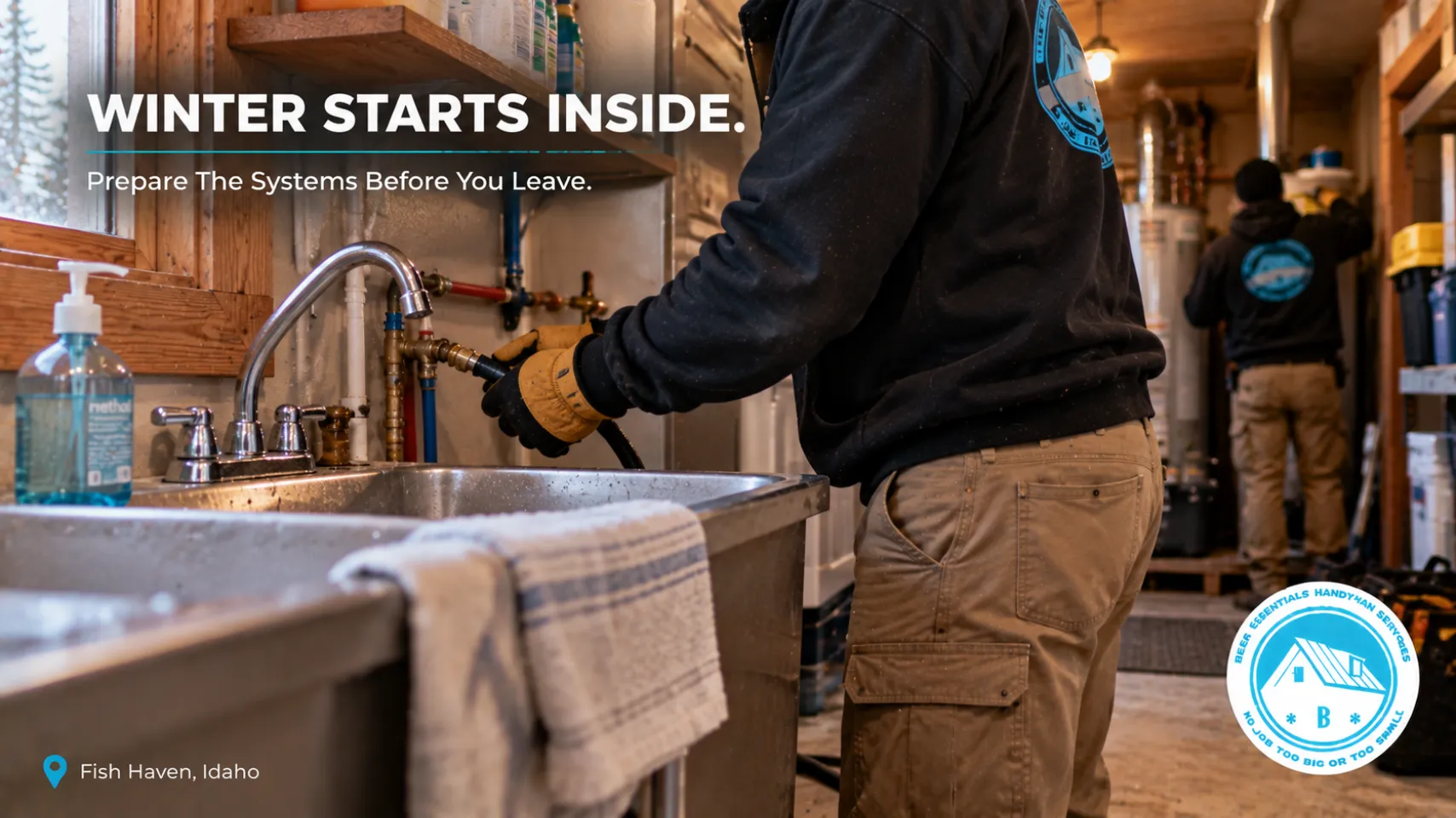
Settle the water arrangements before your last visit ends.
Whether to leave the water on depends on the length of the vacancy, the heat you’ll maintain, the plumbing layout and water source. Appliances and other equipment connected to the supply also affect the decision.
FEMA warns that pipes and water lines can freeze and break in severe winter conditions. Water left in an unprotected part of the system can cause damage even when the rest of the cabin is prepared.
Look under sinks, around toilets, beside the water heater and along accessible appliance supply lines. Check for damp areas or active drips that need attention before you leave.
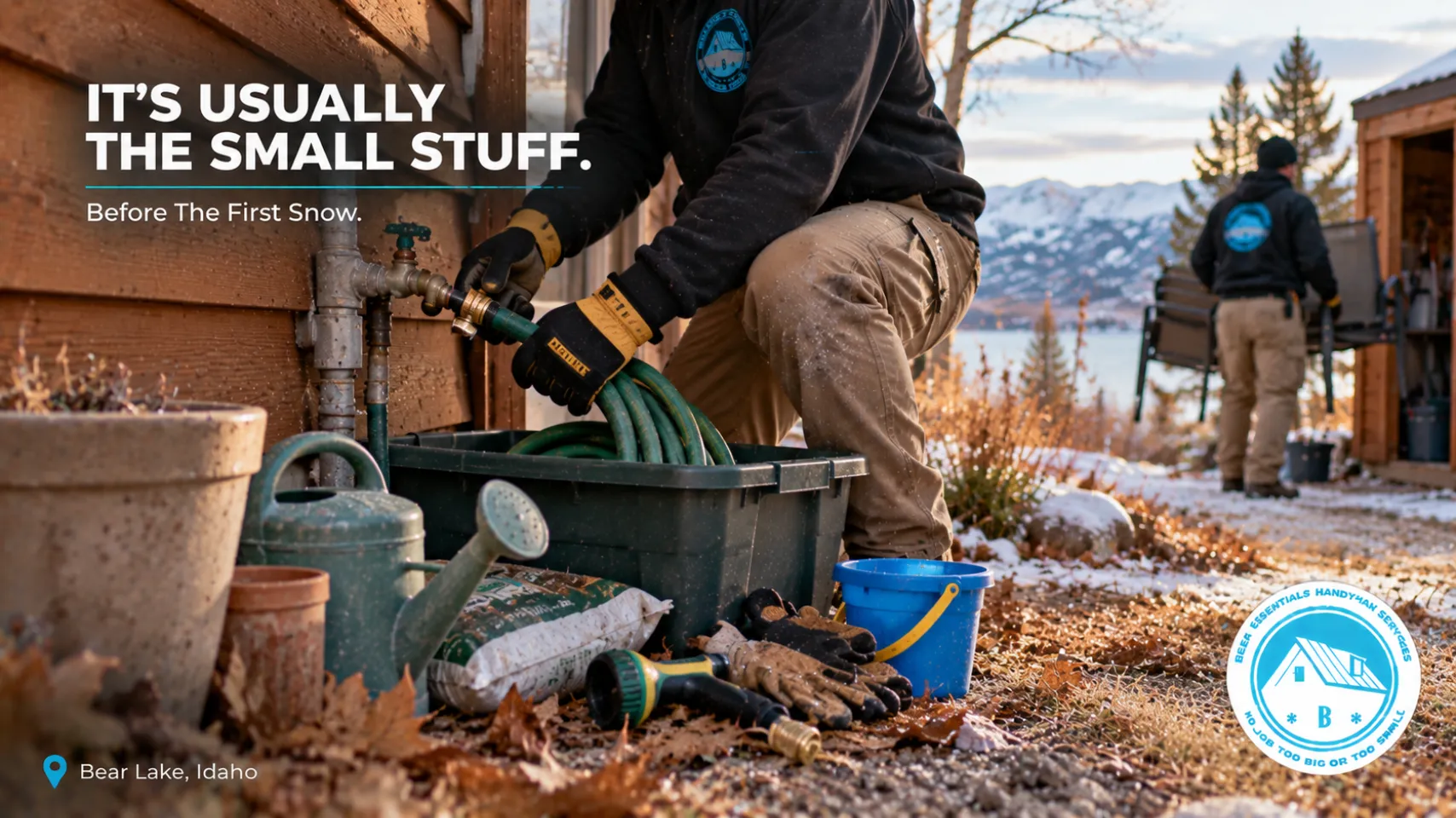
Disconnect outdoor hoses before freezing weather where the fixture’s instructions call for it.
For a full seasonal closure, turning off the main valve may leave water in fixtures, traps, branch lines, appliances and other equipment. Those areas still need to be handled as part of the cabin’s winterization procedure.
Follow the procedure established for your cabin. If you aren’t familiar with the plumbing layout, have it evaluated before attempting a shutdown.
What About the Water Heater?
Include the water heater when deciding what to do with the water supply.
Tank and tankless heaters, along with electric and gas models, have different shutdown and restart instructions. Check the manual before draining the heater, changing its power or fuel supply, or putting it back into use.
During cabin winterization, confirm the manufacturer’s requirements before changing the heater’s water supply or operating status.
When you return in spring, follow the restart procedure before putting the water heater back into service.
Bear Essentials offers seasonal opening and closing, including winterizing and de-winterizing support, along with help with water heaters through its property-maintenance services.
Should I Turn the Heat Off in an Empty Cabin?
Decide on heating at the same time as the plumbing shutdown.
A cabin prepared for a long seasonal closure may have different heating needs from one with water lines and appliances in use all winter.
If the heat will stay on, test the thermostat and confirm the settings required by your cabin’s winter plan and equipment. Make sure the HVAC system is ready to operate while you’re away.
The U.S. Department of Energy recommends programmable thermostats for adjusting heat around occupancy schedules. Air sealing and insulation also help a home use heat efficiently during winter.
Choose a setting that protects the systems you’re leaving active. A lower heating bill won’t help if the cabin’s plumbing needs more heat than the setting provides.
When Should the Furnace Be Checked?
Have known furnace problems addressed before the system is needed for winter visits or to heat an empty cabin.
The U.S. Fire Administration recommends annual furnace inspections and keeping combustible materials clear of the equipment. It also calls for professional chimney cleaning and inspection each year.
During fall cabin maintenance in Bear Lake, check the furnace filter and look for obstructions around accessible supply and return areas.
Bear Essentials offers furnace-filter changes and HVAC support. Its Monthly Emergency Contact and Property Check Program may also include filter change-outs and general HVAC observations, depending on the visit.
Should I Check Smoke and Carbon Monoxide Alarms?
Test the alarms before leaving and before relying on the cabin for winter stays.
Ready.gov recommends installing and testing smoke alarms and carbon monoxide detectors with battery backups as part of winter preparation.
Pay close attention to CO protection if the cabin has fuel-burning equipment.
Carbon monoxide has no color or smell. The U.S. Fire Administration explains that furnaces, heaters and generators can produce it when they malfunction or vent improperly. USFA recommends CO alarms on every level and outside each separate sleeping area.
USFA also recommends keeping dryer, furnace, stove and fireplace vents clear of snow and debris.
Include those vents in the winter checks, particularly after snowfall.
What Should I Do About the Fireplace and Chimney?
Arrange fireplace or wood-stove maintenance before you plan to use it on a cold weekend.
The U.S. Fire Administration recommends professional cleaning and inspection of heating equipment and chimneys each year. Keep at least three feet between heat sources and combustible materials.
The work needed will depend on the chimney’s condition. Finding out in fall gives you time to arrange service before arriving at a cold cabin.
If winter guests or rental guests will use the fireplace or stove, include it in your fall maintenance arrangements.
Should I Winterize My Irrigation System?
Add irrigation to the closing checklist even after you’ve stopped watering the lawn.
University of Idaho Extension notes that freezing temperatures in colder parts of Idaho may require irrigation to stop before the end of October. Its fall lawn guidance includes winterizing irrigation systems as cold weather approaches.
Use the shutdown method required for the system installed at your cabin.
Valves, backflow devices and irrigation layouts can have different requirements. If the procedure calls for compressed air, the pressure and method must be right for that equipment.
Identify the system and its instructions before starting, or arrange help from someone familiar with it.
Do Gutters and Downspouts Matter Before Snow?
Check the gutters and downspouts while you can still see and reach them.
They need to carry away rain and meltwater during winter thaws. Snow on the roof doesn’t mean drainage can be ignored until spring.
Look for debris, loose gutter sections and visible drainage problems. Check where the downspouts discharge; water should reach a suitable drainage area without creating a problem beside the cabin.
As the earlier article in this winter series explains, ice dams involve roof temperature and drainage. Clearing snow from an eave alone may leave the cause unresolved.
If ice dams keep forming in the same place, have the underlying conditions investigated in fall while the roof and drainage areas are visible.
What Should I Look for on the Roof Before Winter?
Start with a look from a safe spot on the ground.
Watch for displaced or damaged roofing, loose flashing, damaged gutters and fascia problems. Check visible areas around roof penetrations for anything that appears damaged or out of place.
Arrange a closer inspection or repair for concerns you spot before snow makes access difficult.
Snow can hide damaged roofing and roof edges, making an existing problem harder to locate later.
Arrange winter roof-snow work separately from the fall check. Roof snow removal and ice dam removal in Bear Lake each need their own scope of work, alongside any inspection or repair.
Should Snow Removal Be Arranged Before It Snows?
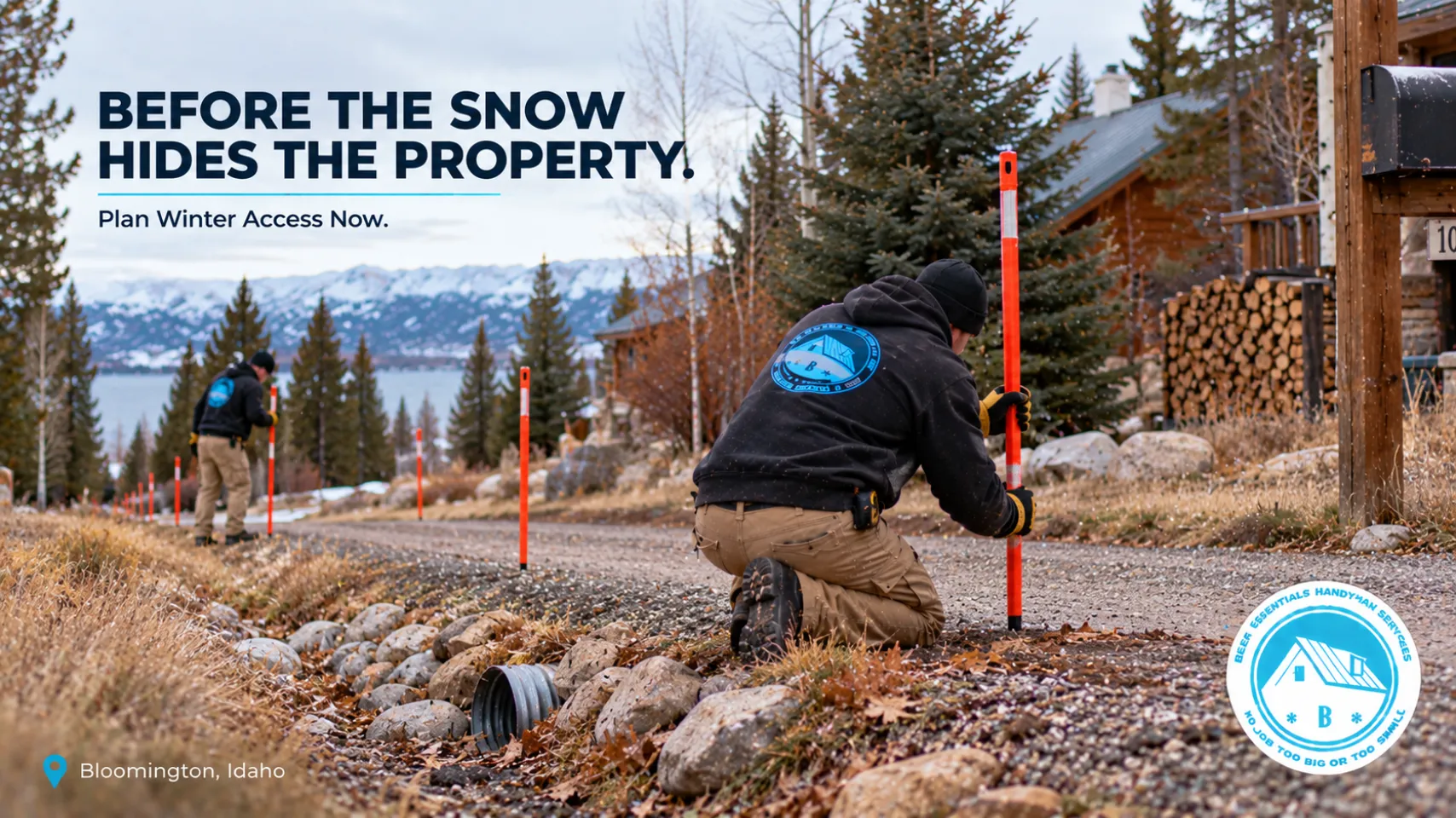
Arrange snow removal in Bear Lake, Idaho, before the areas you need become buried.
Focus the work on access you’ll use and areas that need attention; you may not need the whole property cleared.
Walk through these locations with whoever will handle the work:
Driveway entrance and parking
Main walking route to the cabin
Exterior stairs
Access needed for service visits
Deck access when necessary
Access to outdoor equipment
Roof snow removal when conditions call for it
For winter trips, the Idaho Transportation Department recommends checking Idaho 511 because snow and ice affect the roads. Include that check in your travel plans.
An open highway tells you little about the last stretch into your cabin. Your private driveway may still need clearing before you arrive.
Confirm the driveway arrangements before leaving home, especially if you’re traveling from out of state.
Does My Deck Need a Separate Snow Plan?
Give the deck its own review when arranging snow removal.
An elevated deck has decking, joists, beams, posts and connections, as well as stairs and railings. Its construction needs to be considered when deciding how snow should be handled.
The previous article in this series covers deck snow removal separately for that reason.
Decide whether you’ll use the whole deck during winter or just need a route to the door. Include any stairs used along that route.
Store or secure seasonal furniture before snowfall. Knowing where items sit makes it easier to work around the deck safely once snow covers it.
What Should I Do With Outdoor Furniture, Grills and Loose Items?
Take a final walk around the property before your seasonal departure.
Follow the manufacturer’s instructions for storing or securing outdoor furniture and handling grills and their fuel sources. Put away lightweight items that wind could move or snow could bury.
Check the deck, stairs, patio, driveway edges and areas needed for service access.
A connected hose, a planter in a walkway or furniture beside a stairway is easier to deal with now than after it freezes in place or disappears under snow.
Leave time for these small jobs during the last visit so they don’t get overlooked while you pack.
What About Exterior Vents?
Locate the exhaust vents before snowfall makes them harder to find.
The U.S. Fire Administration recommends keeping dryer, furnace, stove and fireplace vents clear of snow and debris. Blocked venting can contribute to carbon monoxide hazards.
Include vent locations when showing your local contact the areas that need winter attention.
An appliance exhaust on a side or rear wall can be easy to miss when everyone is focused on the front entrance. The person checking the property needs to know where to look for snow buildup.
Take photos of the vent locations before leaving if they’ll help someone find them later.
What If I Won’t Be Back Until Spring?
Arrange winter property maintenance alongside cabin winterization if the property will be empty until spring.
The fall shutdown gets the cabin ready for seasonal conditions.
A later property check records what has happened since you left.
Over the winter, snow may block access, wind may move outdoor items, or a branch may come down. Heating equipment can show a fault, propane levels can drop, and visible plumbing conditions can change.
Even a properly winterized cabin needs someone to notice those changes during a long vacancy.
Bear Essentials’ Monthly Emergency Contact and Property Check Program includes scheduled interior and exterior walkarounds and a written photo report after every visit. Depending on the property and visit, observations may cover propane levels, furnace and HVAC concerns, visible plumbing and general cabin conditions.
The program serves Garden City, Laketown, Fish Haven, St. Charles and Bloomington, with pricing starting at $150 per month.
Set the visit arrangements before you leave so the local contact knows what you’ve prepared and what still needs watching.
Give them a record of the work completed before departure and agree on what to check during your absence.
What Should a Winter Property Check Tell Me?
Ask for a report that tells you what was checked at the cabin and what the visit found.
Photos and written notes let you see the conditions for yourself.
Bear Essentials’ cabin-maintenance guidance covers interior and exterior observations, visible maintenance concerns and documentation of issues that need attention. Its Monthly Program provides a written report with photos after each visit.
The details to check will vary with the cabin and the weather that day.
Useful observations may include whether the cabin is secure, whether accessible plumbing shows moisture, whether heating equipment displays a concern, and whether propane needs attention. Exterior changes and snow blocking access should also be documented where they’re part of the agreed visit.
Arrange a specialist when a concern needs structural, HVAC or plumbing diagnosis. A routine property visit cannot replace that work.
Its purpose is to record visible conditions and bring concerns to the owner’s attention.
For an owner hundreds of miles away, that report helps determine whether to arrange repairs or a closer inspection.
How Do Snow Removal and Property Checks Work Together?
Arrange both services if you need cleared access and updates on the cabin.
Snow removal handles the areas and snow conditions agreed with the contractor.
Property checks provide observations about the cabin during your absence.
A freshly cleared driveway gives someone access to the property, but you still need a visit inside to look for a furnace concern or moisture beneath a sink.
A property visit may identify snow blocking the entry. Check the service agreement before assuming that clearing it is included in that visit.
Agree on the snow-removal work and property-check work separately, including how concerns will be reported.
That way, you and the people caring for the cabin know who is responsible for each job.
The Bear Lake Cabin Winterization Checklist
Use this decision checklist before closing the cabin. Carry out equipment shutdowns according to the instructions for your property.
Inside the Cabin
Settle the water and heating arrangements first. Look over accessible plumbing, check the water-heater procedure and review the furnace filter. Test smoke and CO alarms, and arrange fireplace or chimney maintenance if needed. For each appliance you’ll leave running or shut down, follow its manufacturer’s instructions.
Outside the Cabin
Deal with outdoor hoses and the irrigation shutdown. Check gutters, downspouts, visible roofing and flashing from a safe location. Locate exhaust vents, store or secure seasonal furniture, and look over the deck, stairs and access routes.
Before Driving Away
Confirm which areas will be cleared of snow and who can reach the cabin if there’s a problem. Share keys or access instructions securely with the appropriate contact, arrange the property-check schedule and take photos to record the condition at departure.
Before a winter return trip, check Idaho 511 and the current weather forecast.
What Should You Do First?
Answer these questions before booking work or starting the seasonal shutdown:
Will the cabin be occupied this winter?
Will the plumbing remain active?
Will the heating system continue running?
When do you expect to return?
What parts of the property must remain accessible after snowfall?
Who can visit the cabin while you’re away?
Use your answers to schedule the shutdown work, winter maintenance and any checks between visits.
If you’ll be back at Christmas, prepare for that visit as well as the weeks the cabin sits empty. A property closed until May will need a different arrangement.
Get Your Bear Lake Cabin Ready Before You Leave
Finish the work that fits your cabin’s use and equipment before heading home for the season.
Decide which systems will keep running, complete the required shutdowns, and arrange access and a local contact. Make sure someone can report changes while you’re away.
For a cabin closed until spring, that may mean full cabin winterization followed by scheduled property checks in Bear Lake. If you’ll visit during winter, coordinate the heating and water arrangements with snow removal in Bear Lake so the cabin is ready when you return.
Book the work while the property is still accessible.
You’ll leave knowing who is clearing the driveway, how the plumbing and heating are being managed, and who can visit the cabin if something needs attention.
Frequently Asked Questions
When should I winterize my cabin in Bear Lake, Idaho?
Finish winterizing before freezing conditions can affect unprepared plumbing or equipment. Plan around your departure, the forecast and whether the cabin will stay heated and occupied. The right date can change from year to year.
Do I need to turn off the water at my cabin for winter?
It depends on the cabin’s heating, plumbing, water source and connected equipment, along with how long you’ll be away. Follow the shutdown plan for your property; closing the main valve can still leave water elsewhere in the system.
Should I leave my cabin heat on during winter?
Decide this with the plumbing and winterization arrangements. A fully winterized seasonal cabin can have different needs from one with active water lines. Follow the equipment instructions and the plan established for your cabin.
Should I arrange snow removal before the first snowfall?
Arrange it in advance if you’ll need winter access. Agree on driveway and parking areas, the main entrance, stairs and any service routes that need clearing before snowfall makes the work harder to define.
Does winterizing a cabin mean I don’t need property checks?
Keep a plan for checking the property during a long vacancy. Winterization prepares its systems for cold weather, while later visits can document snow buildup, access changes and other visible concerns.
What should someone check at my Bear Lake cabin during winter?
Agree on the checklist for your cabin and the visit. Bear Essentials’ Monthly Emergency Contact and Property Check Program may cover interior and exterior walkarounds, propane levels, furnace and HVAC observations, visible plumbing and maintenance concerns, with a written photo report after every visit.
Can Bear Lake Services winterize and de-winterize cabins?
Yes. Bear Essentials lists seasonal opening and closing, including winterizing and de-winterizing support, among its property-maintenance services.
References
<u>Ready and FEMA: Winter Storm Preparedness</u> Federal guidance on preparing homes for winter storms, protecting pipes, testing alarms and staying safe.
<u>U.S. Fire Administration: Heating Fire Safety</u> Recommendations for furnace, chimney, fireplace and wood-stove maintenance and heating safety.
<u>U.S. Fire Administration: Carbon Monoxide Poisoning Prevention</u> Guidance on CO alarms, fuel-burning equipment and keeping appliance vents clear.
<u>U.S. Department of Energy: Home Energy Guidance</u> Advice on insulation, air sealing, heating equipment and programmable thermostats.
<u>University of Idaho Extension: Lawn and Irrigation Guidance</u> Fall lawn-care guidance on irrigation and preparing systems for freezing weather.
<u>Idaho Transportation Department: Winter Driving</u> Winter travel guidance covering Idaho 511, road conditions and snowplow safety.
<u>Bear Lake Handyman Services: Property Maintenance</u> Service information on cabin checks, seasonal opening and closing, winterization, and HVAC and filter support.
<u>Bear Lake Handyman Services: Monthly Property Check and Emergency Contact Program</u> Program details covering visits, photo reports, service areas and starting prices.
<u>Bear Lake Handyman Services: Cabin Maintenance Property Visits</u> An explanation of what routine cabin-maintenance visits can check and document.