


18 Nov Roof Snow Removal vs. Ice Dam Removal: What’s the Difference?
A Bear Lake Cabin Owner’s Guide to Understanding Roof Snow, Ice Buildup, and When Professional Attention May Be Needed
Your Bear Lake cabin has been sitting empty for several weeks. After another winter storm, you receive a photo showing snow covering the roof and a thick line of ice hanging along the gutters.
You know the roof needs attention, but what kind of service should you request?
Should someone remove the snow? Does the ice need to be cleared separately? And if the snow is removed, will that prevent water from getting inside?
These are important distinctions for cabin owners in Fish Haven, Bloomington, Garden City, and surrounding Bear Lake communities, especially when they aren’t physically present to assess the property.
Roof snow removal and ice dam removal address different problems. Roof snow removal focuses on managing accumulated snow and the conditions associated with it. Ice dam removal addresses ice that has formed near the roof edge and may be preventing melted snow from draining properly.
The two conditions can occur together, but they don’t necessarily require the same equipment, methods, or corrective work.
Understanding the difference can help you describe what you’re seeing, recognize potential warning signs, and have a more productive conversation with a local service provider.
Roof Snow Removal vs. Ice Dam Removal: The Main Differences
Snow accumulation and ice dams are both winter roofing concerns, but they develop differently.
Roof snow is the precipitation that accumulates on the roof surface. Depending on the roof design, snow density, drifting, and existing structural conditions, that accumulation may create additional loading or other maintenance concerns.
An ice dam forms when melted snow travels toward a colder portion of the roof and refreezes. As ice accumulates near the eaves, it can interfere with drainage and allow additional meltwater to collect behind it.
According to the National Weather Service, ice dams can contribute to water entering an attic and damaging ceilings, walls, and belongings.
Here’s how the two services compare.
An important distinction: Neither service automatically resolves structural damage, roof leaks, inadequate insulation, or other underlying roofing problems.
The U.S. Department of Energy explains that ice-dam prevention may require improvements to air sealing, insulation, and ventilation, depending on the roof assembly. Removing existing ice addresses the immediate buildup, but it doesn’t necessarily eliminate the conditions that caused it.
For a closer look at the conditions behind recurring ice buildup, read our guide to what causes ice dams on Bear Lake cabin roofs.
What Is Roof Snow Removal, and When Might a Bear Lake Cabin Need It?
Roof snow removal involves reducing accumulated snow on a roof when an assessment indicates that removal is appropriate.
For Bear Lake property owners, the decision depends on more than how much snow is visible from the driveway.
A roof’s shape, construction, existing condition, and the distribution and density of snow all matter. Wind can also redistribute snow, creating uneven accumulation across different roof sections.
Two cabins with similar-looking snow coverage may have different structural conditions and maintenance needs.
This is particularly relevant to seasonal cabins because owners may not be present to observe changes after successive storms.
Does Every Snow-Covered Roof Need Snow Removal?
No. Snow on a roof does not automatically mean it needs to be removed.
Roofs are designed with structural loads in mind, including applicable snow loads. However, the actual capacity of an individual roof depends on its design, construction, condition, and other factors.
A photograph or a visual estimate of snow depth cannot reliably establish whether a roof is carrying an excessive load.
The Occupational Safety and Health Administration (OSHA) warns that snow-covered roofs may present structural hazards and should be evaluated for safety before workers access them.
When there is concern about structural capacity, a qualified structural professional may be needed to assess the roof.
For cabin owners, this means avoiding universal rules such as removing snow whenever it reaches a particular depth. There is no single snow-depth threshold that is appropriate for every roof.
What Are the Warning Signs of a Possible Roof Snow Problem?
Some conditions deserve closer attention, particularly when they appear after heavy or repeated snowfall.
These include visibly uneven snow accumulation, significant drifting around roof features, or new signs of distress within the building.
Interior warning signs may include unusual changes in ceilings, visible deformation, or other indications of possible structural movement. These conditions require professional evaluation rather than assumptions about snow depth alone.
A cabin owner should also pay attention to roof areas where snow collects differently, such as valleys, intersections between roof sections, and areas affected by drifting.
If you notice suspected structural distress, keep people away from the affected area and seek appropriate professional or emergency assistance.
Roof snow removal should never be treated as a substitute for evaluating a potentially compromised structure.
How Is Roof Snow Removed Safely?
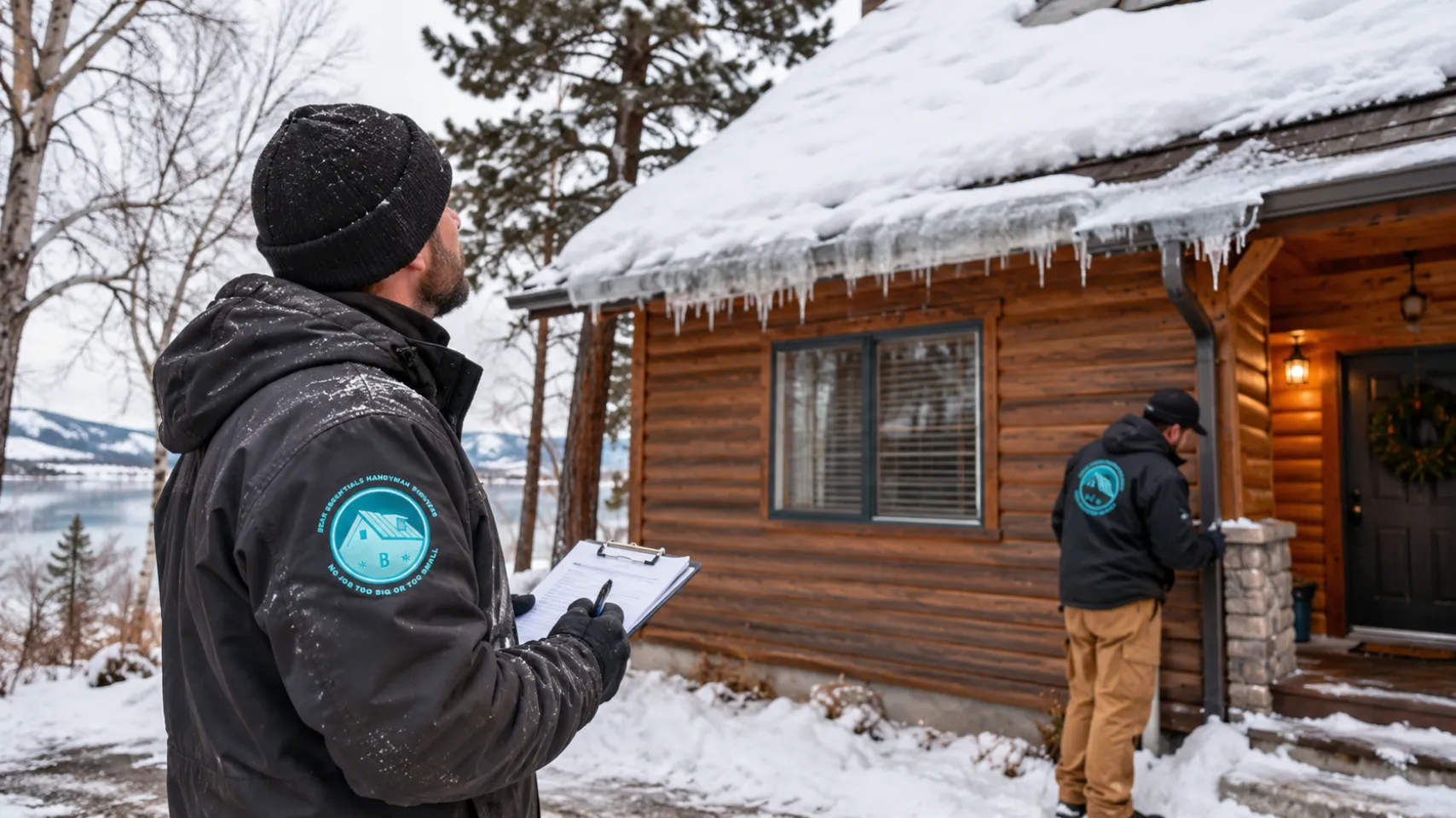
Roof snow removal can expose workers and bystanders to significant hazards.
OSHA identifies falls, hidden roof openings, electrical hazards, falling snow and ice, and possible structural collapse among the risks associated with roof snow removal.
For this reason, OSHA recommends using methods that allow snow to be removed without workers accessing the roof whenever feasible.
Ground-based roof rakes may be appropriate for some situations. Other properties may require specialized access methods or equipment, depending on the roof and conditions.
The correct approach cannot be determined from the amount of snow alone.
Why Ground-Based Roof Snow Removal Matters
For a cabin with an accessible roof edge, a properly selected roof rake may allow trained workers to remove some snow while remaining on the ground.
This can reduce exposure to certain fall hazards, although it doesn’t eliminate the danger of falling snow, ice, or nearby electrical lines.
OSHA also cautions against using a snow rake or shovel while standing on a ladder because doing so increases the risk of losing balance and falling.
Professional roof snow work requires evaluating where the removed snow will fall, keeping people away from the work area, and protecting roof materials from damage.
The safest method depends on the property. A steep roof, fragile roofing materials, limited ground access, or overhead power lines may make certain methods inappropriate.
For homeowners seeking roof snow removal in Bear Lake, the first step should be describing the roof and its current conditions so the work can be evaluated.
What Is an Ice Dam, and Why Does It Form on Cabin Roofs?
An ice dam is a buildup of ice that develops when water from melting roof snow refreezes near a colder roof edge.
The process often begins with temperature differences across the roof.
Heat escaping from the building can warm portions of the roof enough to melt snow. The resulting water travels downward until it reaches a colder area, commonly near the eaves, where it freezes again.
As this process repeats, ice can accumulate and obstruct drainage.
Additional meltwater may then collect behind the ice.
The National Weather Service explains that water can work beneath roofing materials and eventually enter the attic or living space, damaging building components and personal belongings.
Why Can Ice Dams Form Even When It’s Freezing Outside?
The temperature of the outdoor air is only one part of the equation.
The roof surface can have different temperatures in different locations.
For example, heat loss from the living space may warm part of the roof while the overhanging eaves remain colder because they extend beyond the heated portion of the building.
Snow can melt on the warmer section and refreeze when it reaches the colder edge.
Sun exposure and changing outdoor temperatures can also influence melting and refreezing.
This explains why an ice dam can develop even during an extended period of cold weather.
Does Every Icicle Mean There Is an Ice Dam?
No.
Icicles can form when water freezes as it drips from a roof edge or another surface. Their presence alone doesn’t establish that an ice dam is blocking drainage or causing water intrusion.
However, substantial or recurring icicle formation can indicate that melting and refreezing are occurring.
Cabin owners should pay closer attention when icicles appear alongside thick ice ridges, blocked drainage, or interior moisture.
The Department of Energy identifies icicles as a potential indication of roof melting conditions associated with ice dams.
A qualified assessment is needed to determine whether the visible ice is creating a drainage problem.
How Is Ice Dam Removal Different From Removing Roof Snow?
Ice dam removal focuses on the existing ice obstruction and the conditions around it.
Unlike loose or compacted snow, ice may be firmly attached to roofing materials, gutters, or other components.
Attempting to break it away with inappropriate tools can damage shingles, flashing, gutters, and other roof features.
It can also create hazards for anyone standing below the roof edge.
The removal approach must account for the type of roof, the location and thickness of the ice, the presence of water intrusion, and safe access.
Professional ice dam work may involve specialized methods for reducing ice buildup or restoring drainage. The appropriate technique depends on the circumstances.
Aggressively chipping or striking ice should not be assumed to be a safe solution.
Will Removing Roof Snow Eliminate an Existing Ice Dam?
Not necessarily.
Removing some snow may reduce the amount of meltwater available to contribute to an ice dam, depending on the situation.
However, an existing ice obstruction can remain after nearby snow has been removed.
Likewise, removing an ice dam does not automatically address excessive snow loading elsewhere on the roof.
This is why it’s important to describe both conditions when contacting a service provider.
If your cabin has accumulated snow across the roof and thick ice along the eaves, the situation may require more than one type of assessment.
Can Ice Dam Removal Stop an Active Roof Leak?
Removing obstructing ice may help address a drainage condition contributing to water intrusion, but it does not guarantee that a leak will stop.
Water may already have entered the roof assembly, insulation, attic, or interior walls.
Roofing materials may also have existing defects or damage.
If water is entering your cabin, the source and extent of the problem should be evaluated. Interior water damage and electrical hazards may require separate attention.
For an unoccupied cabin, discovering moisture early is particularly important because the owner may not know how long the condition has existed.
How Can You Tell Whether Your Cabin Needs Roof Snow Removal or Ice Dam Removal?
The most useful starting point is identifying what you can actually observe.
A large amount of snow on the roof is a different concern from a thick ridge of ice at the eaves. Water stains inside the cabin introduce another issue that may require leak investigation.
The following examples can help owners communicate the situation more clearly.
This table is intended to help identify the type of concern, not diagnose the condition of a roof.
Photographs can be useful when requesting an assessment, but owners should not climb onto a snow-covered roof or enter an unsafe area to obtain them.
Why Bear Lake Cabin Owners Should Pay Attention to Roof Edges
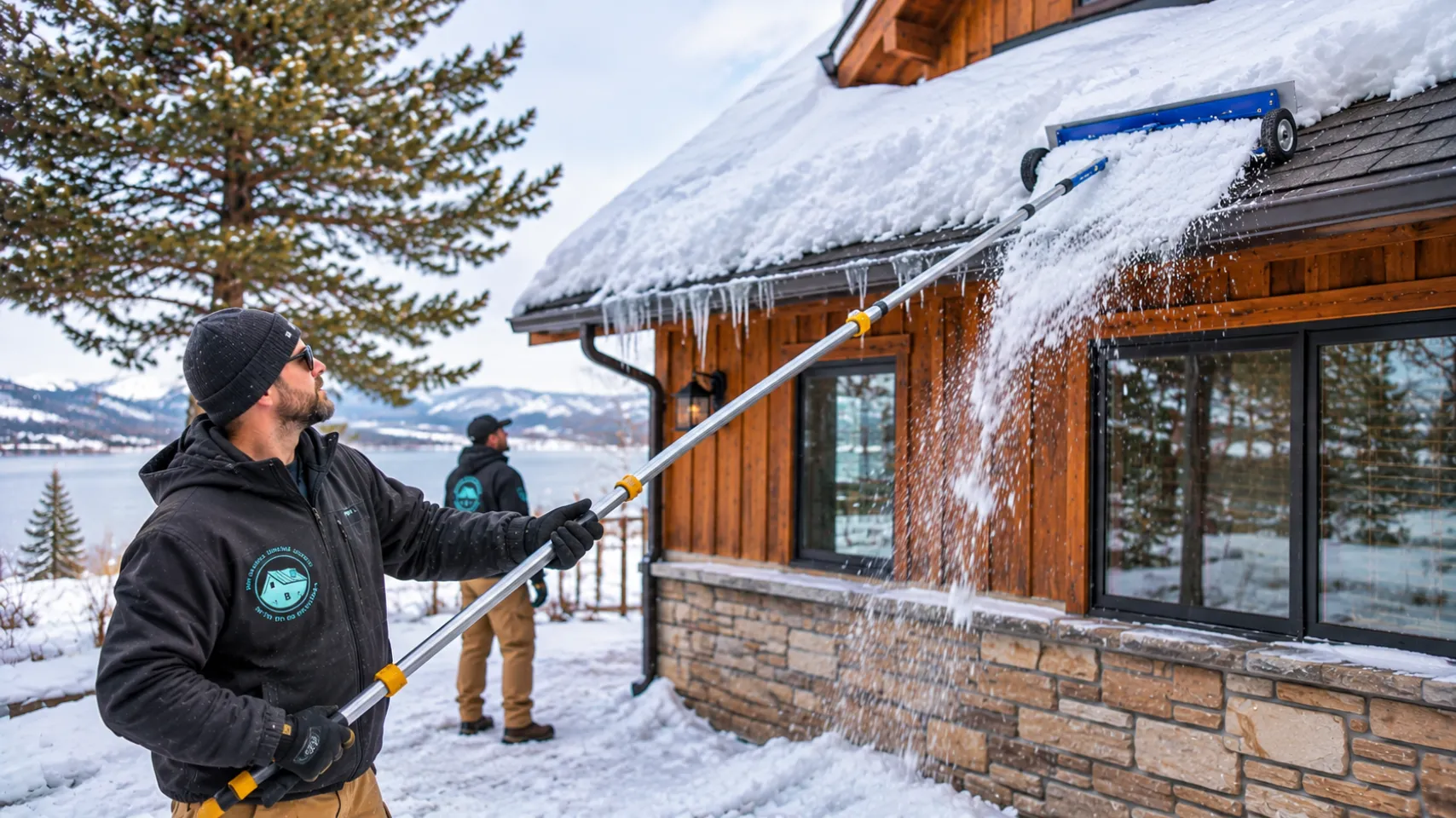
Roof edges deserve attention because they are where several winter roofing concerns can become visible.
Snow may accumulate above the eaves, meltwater may refreeze, and gutters or downspouts may become obstructed.
For cabins that remain unoccupied during winter, these changes may go unnoticed until the next property visit.
Consider a seasonal homeowner living several hours away from Fish Haven or Bloomington.
The owner might receive a photo showing snow on the roof but have no way to determine whether the accumulation is unusual for that particular structure.
A second photograph might reveal thick ice along the eaves.
Those observations are useful, but they represent different concerns and should be communicated separately.
What About Gutters and Downspouts?
Gutters and downspouts are part of the roof drainage system.
When debris or ice obstructs drainage, water may not move away from the roof edge as intended.
The National Weather Service recommends keeping gutters and downspouts free of leaves and other debris as part of ice-dam prevention.
However, gutter cleaning alone cannot correct heat loss or roof-temperature differences that contribute to ice dam formation.
A complete assessment may need to consider both drainage conditions and the roof assembly.
For Bear Lake cabins, seasonal gutter maintenance and roof-edge observations can be part of a broader property maintenance plan.
Can Better Insulation and Ventilation Prevent Ice Dams?
Air sealing, insulation, and appropriate ventilation can help reduce the conditions that contribute to ice dam formation.
The Department of Energy explains that heat transfer from a building into the roof assembly can warm the roof deck and contribute to snow melting.
Reducing unwanted heat loss can help limit this process.
In many vented attic designs, air sealing and insulation work together to reduce heat transfer from the conditioned living space. Proper ventilation can also help manage roof assembly temperatures.
However, the appropriate solution depends on the building’s construction.
A vented attic and an unvented roof assembly may require different approaches.
For that reason, homeowners should avoid assuming that adding ventilation or insulation in isolation will resolve every ice-dam problem.
The Department of Energy also identifies appropriate eave protection as an important roofing detail in cold climates.
Why Does This Matter for Seasonal Cabins?
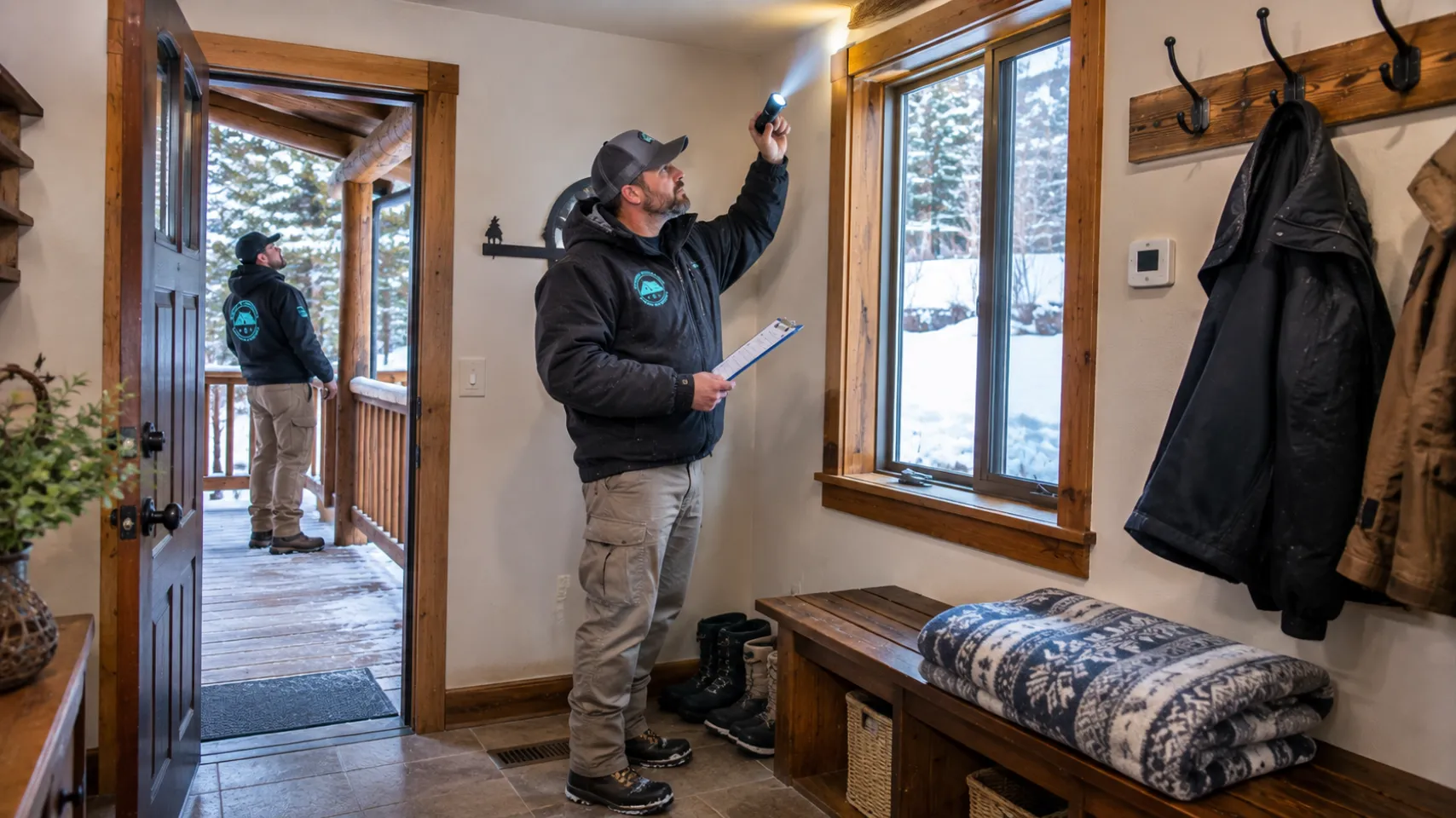
Seasonal cabins may be heated differently depending on whether they are occupied, winterized, or maintained at a reduced indoor temperature.
Those operating conditions can affect building temperatures, but they do not eliminate the possibility of ice dams.
Roof design, air leakage, insulation, weather conditions, and drainage still matter.
If ice dams recur at the same location each winter, the property may benefit from an assessment of the underlying roof and attic conditions rather than repeated removal alone.
For additional seasonal preparation considerations, see our winter preparation checklist for Bear Lake cabins, which covers heating, plumbing, gutters, winter access, and property checks.
What Should Out-of-State Bear Lake Cabin Owners Do After a Winter Storm?
When you live outside the Bear Lake area, you may depend on photographs, property visits, or reports from someone local to understand current conditions.
That makes it helpful to establish a process for communicating winter concerns before a problem occurs.
If someone notices snow accumulation or ice buildup, ask them to document the visible conditions from a safe location.
Useful information includes the property address, approximate location of the concern, whether water entry is visible, and whether the condition appears to have changed since the previous visit.
For example, a photo of a roof edge may help show whether there is visible ice buildup. An interior photograph may document a new ceiling stain.
Neither photograph establishes the full cause or severity of the problem, but both can help a service provider understand what needs evaluation.
Owners planning for seasonal access can also review our Bear Lake snow removal guide for cabin owners, which explains how driveway, deck, and roof concerns fit into broader winter property planning.
How Can Monthly Cabin Checks Support Winter Property Care?
For remote owners, regular property observations can help identify visible maintenance concerns while the cabin is unoccupied.
Bear Essentials Handyman Services offers a Monthly Property Check & Emergency Contact Program for Bear Lake-area cabin and vacation-home owners.
The company’s published program includes scheduled property visits, interior and exterior walkarounds, and written reports with photographs.
These visits can help owners stay informed about visible property conditions while they’re away.
However, a routine property check is not a structural roof inspection, and it does not automatically include roof snow removal or ice dam removal.
Those services should be discussed separately when a concern is identified.
What Should You Ask Before Hiring a Roof Snow or Ice Dam Removal Service?
If you’re looking for roof snow removal in Bear Lake, make sure the provider understands whether your concern involves snow accumulation, ice buildup, water intrusion, or a combination of conditions.
A useful conversation should cover the roof type, visible conditions, safe access, and what work can reasonably be performed.
Ask whether the provider evaluates roof snow and ice dam concerns separately.
You should also clarify whether the quoted work includes only removing snow or ice, or whether additional roofing, drainage, or maintenance work may be necessary.
For an unoccupied property, discuss access instructions and how the provider will communicate with you.
Avoid assuming that a quote for roof snow removal includes ice dam removal. The two services may require different assessments and work scopes.
Does Bear Lake Services Handle Roof Snow and Ice Dam Concerns?
Yes. Bear Essentials Handyman Services lists both roof snow concerns and ice-dam concerns on its official snow removal service page.
The company is based in Fish Haven, Idaho, and accepts inquiries from Bear Lake-area property owners.
For roof snow concerns, the company asks customers to provide photographs and describe visible conditions. Appropriate work depends on the roof type, access, and current conditions.
For ice-dam concerns, customers are asked to describe the buildup, drainage problems, or signs of water entry.
The team then reviews the property location, work requirements, safe access, and availability before discussing service options.
This is particularly useful for cabin owners who are unsure which service to request.
You can explain what you’re seeing and allow the team to assess what assistance may be available.
Roof Snow Removal vs. Ice Dam Removal: Which Service Should You Request?
If your concern is accumulated snow across the roof, begin by asking about roof snow removal and whether the conditions warrant an assessment.
If you’re seeing a thick ice ridge near the eaves, recurring ice buildup, or drainage problems, describe the issue as a possible ice dam.
If water is entering the cabin, make that clear immediately. Water intrusion may require investigation and repairs beyond snow or ice removal.
And if you’re seeing both significant snow accumulation and substantial ice buildup, explain both conditions rather than assuming one service will address everything.
For cabin owners in Fish Haven, Bloomington, Garden City, and the surrounding Bear Lake region, knowing the difference makes it easier to communicate with a local service provider and plan appropriate next steps.
Need Help With Roof Snow or Ice Buildup at Your Bear Lake Cabin?
Bear Essentials Handyman Services helps Bear Lake-area property owners evaluate winter service requests involving driveway access, roof snow concerns, and ice buildup.
Whether you’re at the cabin or managing the property from another state, you can contact the team with your address, photographs, and a description of what you’re seeing.
Call (208) 852-8896 or request snow removal services in Bear Lake to discuss available options.
Frequently Asked Questions
What is the difference between roof snow removal and ice dam removal?
Roof snow removal focuses on accumulated snow that may need to be reduced after evaluating roof conditions and safety. Ice dam removal addresses ice buildup that can obstruct drainage near the roof edge. They are separate services, although both concerns can occur on the same roof.
Does removing roof snow prevent ice dams?
Removing snow may reduce the amount of meltwater contributing to an ice dam, but it does not guarantee prevention. Heat loss, roof-temperature differences, air sealing, insulation, and ventilation may also contribute to ice dam formation.
Can ice dams damage a cabin roof?
Yes. Ice dams can prevent meltwater from draining properly. Water may collect behind the ice and enter beneath roofing materials, potentially damaging insulation, ceilings, walls, and other building components.
When should I remove snow from my cabin roof?
There is no universal snow-depth threshold for every roof. The need for removal depends on the roof’s design, condition, snow loading, and other factors. If excessive loading or structural distress is suspected, seek qualified professional assessment.
Is it safe to remove roof snow with a roof rake?
Ground-based roof rakes can reduce certain fall risks when properly selected and used under appropriate conditions. However, falling snow and ice, power lines, and other hazards remain. OSHA recommends avoiding roof access when feasible and assessing the work before removal.
Can I break an ice dam with a shovel or hammer?
Striking or chipping ice can damage roofing materials and create falling-ice hazards. Ice dam removal should be evaluated using methods appropriate to the roof and conditions rather than assuming that forcefully breaking the ice is safe.
Why do ice dams keep forming in the same place?
Recurring ice dams may indicate persistent roof-temperature differences, heat loss, drainage conditions, or roof-design factors. Air sealing, insulation, ventilation, and roof assembly details may need evaluation.
Does Bear Lake Services offer roof snow removal and ice dam removal?
Bear Essentials Handyman Services accepts inquiries about roof snow and ice-dam concerns in the Bear Lake area. Specific work depends on property location, roof type, access, conditions, and service availability.